
 EN
EN
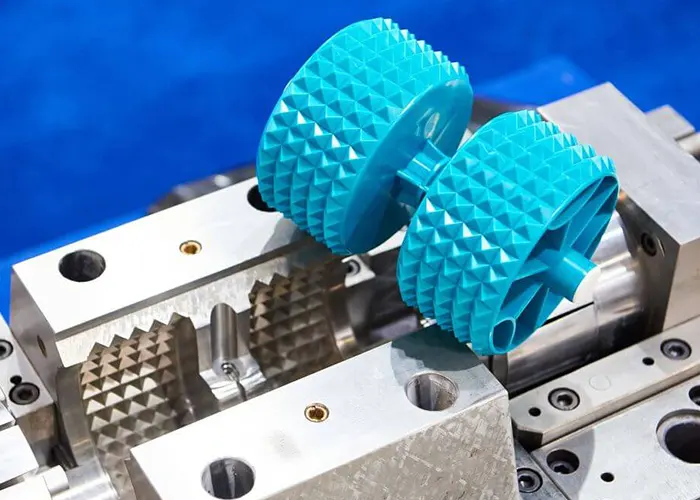
Manufacturing decision-makers constantly seek production methods that balance quality, speed, and economic efficiency. Custom injection molding has emerged as a dominant solution across industries ranging from automotive and medical devices to consumer electronics and industrial equipment. Understanding the specific cost advantages embedded in this manufacturing process enables businesses to make informed investment decisions and optimize their production strategies. The economic benefits extend far beyond simple per-unit pricing, encompassing tooling longevity, material efficiency, labor reduction, and scalability advantages that compound over production lifecycles.
The cost-effectiveness of custom injection molding stems from multiple interrelated factors that create measurable return on investment when production volumes and timelines align with business objectives. Unlike many manufacturing processes where unit costs remain relatively static regardless of volume, this method demonstrates dramatic cost reductions as production quantities increase. The initial tooling investment becomes amortized across thousands or millions of parts, while automation minimizes ongoing labor expenses and material waste drops to minimal levels through precise process control. For companies evaluating production alternatives, examining these specific cost drivers reveals why custom injection molding consistently delivers superior economic performance for medium to high-volume manufacturing requirements.
The Economics of Tooling Investment and Amortization
Understanding Initial Mold Development Costs
The upfront investment in custom injection molding tooling represents the most significant barrier to entry but simultaneously creates the foundation for long-term cost efficiency. High-quality production molds are precision-engineered tools manufactured from hardened steel or aluminum alloys, designed to withstand hundreds of thousands to millions of injection cycles. While prototype or low-volume molds may cost several thousand dollars, production-grade tooling for complex geometries can require investments ranging from fifteen thousand to over one hundred thousand dollars depending on part complexity, cavity count, and material requirements. This substantial initial expenditure demands careful production volume analysis to ensure proper cost amortization.
The relationship between tooling cost and part volume creates a critical breakeven calculation that determines when custom injection molding becomes economically superior to alternative manufacturing methods. For production runs exceeding ten thousand units, the per-part tooling cost typically drops below thresholds where additive manufacturing or CNC machining can compete economically. A mold costing fifty thousand dollars produces parts with only fifty cents of tooling cost per unit at one hundred thousand pieces, but just five cents per unit at one million pieces. This dramatic cost reduction curve makes custom injection molding increasingly attractive as projected volumes rise, creating compelling economics for products with established market demand.
Mold Longevity and Multi-Generation Production Value
Properly maintained production molds deliver value far beyond single production runs, with many tools remaining productive through multiple product generations and design iterations. Steel molds manufactured to exacting standards routinely achieve lifespans exceeding one million cycles, while even softer aluminum tooling can produce several hundred thousand parts before requiring replacement. This longevity transforms the initial tooling investment into a long-term manufacturing asset that continues delivering value across years of production. Companies frequently modify existing molds through cavity adjustments, texture changes, or dimensional updates at costs representing mere fractions of new tool development expenses.
The ability to refresh and repurpose existing molds creates additional cost advantages that amplify over product lifecycles. When design changes occur, experienced mold makers can often accommodate modifications through insert replacements, cavity welding and re-machining, or texture alterations without complete tool reconstruction. These modification costs typically range from ten to thirty percent of new tool development expenses, enabling companies to respond to market feedback, implement design improvements, or accommodate specification changes while preserving the majority of their tooling investment. This flexibility ensures that custom injection molding remains economically viable even as products evolve through continuous improvement cycles.
Material Efficiency and Waste Minimization
Precision Material Usage in Injection Processes
Custom injection molding achieves material efficiency levels unmatched by subtractive manufacturing methods, with waste typically limited to runner systems and occasional startup scrap. The process meters precise resin quantities into heated barrels, melts material to exact specifications, and injects controlled volumes into closed mold cavities where every gram contributes to finished part formation. Unlike CNC machining where material removal can generate waste exceeding fifty percent of starting stock, or casting processes requiring extensive secondary machining, injection molding converts the vast majority of input material directly into saleable product. This efficiency translates directly to cost savings, particularly with engineering-grade resins commanding premium prices.
Modern hot runner systems further enhance material efficiency by eliminating solidified plastic in runner channels that must otherwise be discarded or reground. While adding to initial tooling costs, hot runner technology maintains molten plastic pathways from machine nozzle to cavity gates, ensuring only actual part volumes consume material. For high-volume production of small precision components, hot runner systems can reduce material consumption by fifteen to thirty percent compared to cold runner designs. The cumulative material savings across production runs measured in millions of units create substantial cost reductions that quickly justify the additional tooling investment, particularly when processing expensive engineering thermoplastics or specialty compounds.
Regrind Integration and Closed-Loop Material Systems
The thermoplastic materials used in custom injection molding offer unique recyclability advantages that further reduce effective material costs through regrind integration. Runners, sprues, and rejected parts can be ground into uniform pellets and reintroduced into production processes, typically at percentages ranging from fifteen to thirty percent depending on application requirements and material specifications. This closed-loop approach transforms what would otherwise represent waste into usable feedstock, reducing virgin resin purchases and disposal costs simultaneously. Careful process control ensures regrind integration maintains part quality while delivering measurable material cost reductions.
Advanced material handling systems automate regrind processing and blending, maintaining consistent material properties while minimizing labor involvement. Beside-the-press granulators immediately process runners and rejected parts, creating uniform regrind that automated blending systems proportion precisely with virgin resin before feeding injection units. This integration ensures consistent melt characteristics and part quality while maximizing material utilization. For large-volume production facilities, regrind systems can reduce effective material costs by ten to twenty percent, creating annual savings measured in tens or hundreds of thousands of dollars depending on production volumes and resin prices. These material efficiency gains represent ongoing cost advantages that accumulate throughout product lifecycles.
Labor Automation and Production Speed Advantages
Automated Cycle Efficiency and Minimal Human Intervention
Custom injection molding operates with automation levels that dramatically reduce per-part labor costs compared to manually-intensive manufacturing processes. Once properly configured and validated, modern injection molding machines execute complete production cycles autonomously, requiring human intervention primarily for material replenishment, quality sampling, and periodic maintenance. Cycle times for typical components range from fifteen seconds to two minutes, with machines producing parts continuously across multiple shifts with minimal supervision. This automation capability enables single operators to oversee multiple machines simultaneously, distributing labor costs across thousands of parts per shift.
The economic impact of this automation becomes particularly pronounced when comparing labor requirements against alternative manufacturing methods. While CNC machining might require dedicated operator attention for tool changes, program adjustments, and part handling, and manual assembly processes demand continuous worker engagement, injection molding machines execute repetitive cycles with consistent precision requiring only periodic monitoring. A single skilled technician can effectively manage three to six injection molding machines depending on cycle times and part handling requirements, producing thousands of components per shift. This labor efficiency translates to per-part labor costs often measured in pennies rather than dollars, creating substantial competitive advantages in labor-intensive markets.
Integrated Automation and Lights-Out Manufacturing
Advanced custom injection molding facilities increasingly integrate robotic part handling, automated inspection systems, and sophisticated process monitoring to achieve true lights-out manufacturing capability. Collaborative robots remove finished parts from molds, place components into inspection fixtures, and package approved products without human involvement. Machine vision systems conduct dimensional verification and cosmetic inspection at cycle speeds, automatically segregating non-conforming parts while accumulating statistical process data. These integrated automation systems enable production continuation through nights, weekends, and holidays, maximizing equipment utilization while eliminating premium shift labor costs.
The cost advantages of lights-out manufacturing extend beyond direct labor savings to encompass improved equipment utilization and accelerated production timelines. Injection molding machines represent significant capital investments, with modern electric presses costing from fifty thousand to several hundred thousand dollars depending on tonnage and capabilities. Maximizing productive runtime directly improves return on these capital investments while reducing time-to-market for new products and shortening delivery leadtimes for existing production. Facilities achieving seventy to eighty-five percent equipment utilization through automated operation realize substantially better unit economics than comparable facilities limited to single-shift manual operation, with the improved capital efficiency often justifying automation investments within twelve to twenty-four months.
Scalability and Volume Production Economics
Multi-Cavity Tooling and Exponential Output Gains
Custom injection molding achieves remarkable production scalability through multi-cavity mold designs that produce multiple identical parts during each machine cycle. Rather than investing in additional machines or accepting linear production constraints, manufacturers can specify molds containing two, four, eight, sixteen, or even thirty-two cavities that fill simultaneously from each injection shot. A thirty-second cycle time producing eight parts per cycle generates nine hundred sixty parts per hour from a single machine, compared to just one hundred twenty parts hourly from single-cavity tooling. This multiplication effect dramatically reduces per-part production costs while maintaining consistent quality across all cavities.
The economics of multi-cavity tooling create compelling cost advantages despite higher initial mold investments. While an eight-cavity mold might cost fifty to seventy percent more than single-cavity tooling, it produces parts at one-eighth the cycle-time cost, creating rapid payback through volume production. For high-demand components, the additional tooling investment typically returns positive cash flow within the first production run, after which all subsequent production benefits from the improved efficiency. This scalability enables custom injection molding to accommodate demand growth without proportional increases in capital equipment, facility space, or labor resources, providing cost-effective production expansion pathways that maintain competitive unit economics.
Consistency Across Production Volumes
Unlike manufacturing processes where quality variation often increases with production speed or volume, properly controlled custom injection molding maintains exceptional consistency across millions of production cycles. The closed-mold process, precise material metering, and controlled cooling create highly repeatable conditions that produce virtually identical parts throughout production runs. This consistency eliminates costly secondary operations, reduces quality inspection requirements, and minimizes customer returns or warranty claims. The reliability of high-volume injection molding enables just-in-time manufacturing strategies and lean inventory practices that further reduce total cost of ownership.
Statistical process control systems monitor critical parameters throughout production runs, automatically adjusting process variables to maintain dimensional accuracy and cosmetic quality as conditions evolve. Modern injection molding machines track hundreds of data points per cycle, including injection pressure profiles, melt temperatures, cooling times, and cavity fill balance. This comprehensive monitoring enables predictive maintenance scheduling, prevents quality drift before defects occur, and provides documented evidence of process capability for regulated industries. The resulting quality consistency reduces inspection labor, minimizes scrap rates below one percent, and ensures customer satisfaction across product lifecycles. These quality-driven cost advantages complement the direct manufacturing efficiencies to create comprehensive economic benefits.
Design Integration and Secondary Operation Elimination
Complex Geometry Formation in Single Operations
Custom injection molding enables the formation of highly complex three-dimensional geometries, intricate surface details, and integrated functional features within single production cycles. Undercuts, threads, living hinges, snap fits, textured surfaces, and precision dimensional tolerances become achievable through expert mold design and process optimization. This capability to consolidate multiple features into unified components eliminates assembly operations, reduces part counts, and simplifies supply chain management. What might require five separate machined components and four assembly steps can often be accomplished as a single molded part, dramatically reducing total manufacturing costs.
The cost savings from part consolidation extend throughout product lifecycles, affecting manufacturing expenses, inventory management, assembly labor, and field service requirements. Fewer discrete components mean reduced supplier management, simplified quality control, lower inventory carrying costs, and decreased assembly complexity. Products designed specifically for custom injection molding capabilities often achieve thirty to fifty percent part count reductions compared to traditional assembly-intensive designs. These reductions translate directly to manufacturing cost savings while simultaneously improving product reliability by eliminating potential failure points at component interfaces and fastener locations.
Integrated Color, Texture, and Finishing
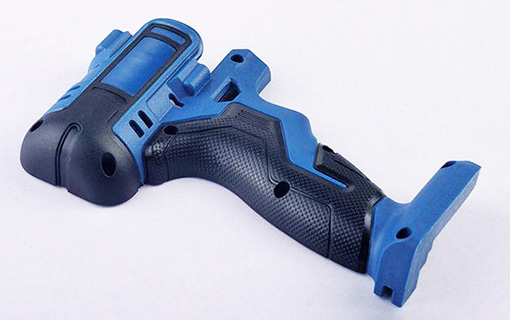
Custom injection molding produces finished components directly from molds, often eliminating secondary painting, coating, or finishing operations that add cost and complexity to other manufacturing processes. Pigmented resins create uniform color throughout part cross-sections, preventing the chipping or wear-through common with surface-applied finishes. Mold surface textures transfer precisely to molded parts, creating everything from high-gloss finishes to leather-grain textures without additional processing. This integrated finishing capability reduces manufacturing steps, shortens production timelines, and eliminates the environmental compliance costs associated with painting or plating operations.
The economic advantages of integrated finishing become particularly significant for high-volume consumer products and cosmetic applications where appearance quality directly influences market success. Eliminating painting operations saves not only the direct costs of coating materials and application labor but also the associated expenses of drying ovens, ventilation systems, waste treatment, and environmental permitting. For products requiring multiple colors, overmolding and two-shot molding techniques enable complex color combinations and material property variations within single manufacturing operations. These advanced custom injection molding capabilities create design possibilities and cost efficiencies unattainable through conventional manufacturing and finishing processes.
FAQ
What production volumes make custom injection molding economically viable?
Custom injection molding typically becomes cost-effective at production volumes exceeding five thousand to ten thousand units, though the exact threshold depends on part complexity, material costs, and alternative manufacturing options. The initial tooling investment creates a breakeven point that shifts favorably as volumes increase. For simple geometries with modest tooling costs, economic viability may begin at lower volumes, while complex multi-cavity molds require higher quantities to justify investment. Projects with anticipated lifetime volumes exceeding fifty thousand units almost universally benefit from injection molding economics, while those below three thousand units often find better value in additive manufacturing or machining alternatives.
How does material selection affect the cost-effectiveness of custom injection molding?
Material selection significantly influences both per-part costs and overall project economics in custom injection molding. Commodity thermoplastics like polypropylene and polyethylene offer the lowest material costs, often below two dollars per pound, making them ideal for cost-sensitive applications. Engineering resins such as nylon, polycarbonate, and acetal provide superior mechanical properties at moderate price premiums, typically ranging from three to eight dollars per pound. High-performance polymers like PEEK or liquid crystal polymers can exceed fifty dollars per pound but enable applications where metal replacement or extreme environmental resistance justify the investment. The material efficiency of injection molding means that even expensive resins remain cost-effective when part performance requirements demand their unique properties.
Can custom injection molding remain cost-effective for products requiring frequent design changes?
Custom injection molding can accommodate design evolution through strategic mold construction and modification approaches, though frequent substantial changes may compromise cost advantages. Modular mold designs with replaceable inserts enable dimensional adjustments, texture modifications, and feature additions at costs representing fifteen to thirty percent of new tooling investments. For products in active development, aluminum tooling provides lower initial investment and easier modification compared to hardened steel, accepting reduced tool life as a reasonable tradeoff during design validation phases. Once designs stabilize, production tooling in hardened steel delivers maximum longevity and lowest per-part costs. Companies should align tooling strategies with product lifecycle stages, using prototype tooling during development and investing in production-grade molds only after design validation confirms market fit and volume projections.
What hidden costs should businesses consider when evaluating custom injection molding?
Beyond obvious tooling and per-part manufacturing costs, businesses should evaluate several additional factors when assessing total injection molding economics. Mold storage fees can accumulate during production gaps, though many molders include reasonable storage within service agreements. Sample approval iterations and first-article inspection processes consume time and resources before production release. Material minimum order quantities may require larger resin purchases than immediate production needs dictate, creating inventory carrying costs. International shipping for overseas manufacturing adds freight expenses and extended leadtimes that affect working capital requirements. Quality issues discovered after production begins can necessitate mold modifications or part rework that impact project budgets. Comprehensive cost analysis should incorporate these factors alongside direct manufacturing expenses to ensure accurate financial projections and appropriate vendor selection.
Table of Contents
- The Economics of Tooling Investment and Amortization
- Material Efficiency and Waste Minimization
- Labor Automation and Production Speed Advantages
- Scalability and Volume Production Economics
- Design Integration and Secondary Operation Elimination
-
FAQ
- What production volumes make custom injection molding economically viable?
- How does material selection affect the cost-effectiveness of custom injection molding?
- Can custom injection molding remain cost-effective for products requiring frequent design changes?
- What hidden costs should businesses consider when evaluating custom injection molding?
