We are a professional Mold manufacturing manufacturer |

Get a Quote
Get a Quote

Insert Molding

Are you looking for ways to decrease the weight, complexity and cost of your 
parts? Is replacing metal components with high-performance plastic parts a 
priority? Injection molding inserts can address these challenges and give you 
greater design freedom.

Reduced Assembly Costs:

Insert molding molds the insert and plastic part at one time, reducing the subsequent assembly process. Our process is the cheapest on the market, 
and you still get high-quality insert molds. We provide you with the best price to help your business

Reduced Assembly Costs:

nsert molding molds the insert and plastic part at one time, reducing the subsequent assembly process. Our process is the cheapest on the market, 
and you still get high-quality insert molds. We provide you with the best price to help your business

Flexible use of Material:

We can expertly use a variety of materials to turn your ideas into reality. We have state-of-the-art machines and a well-trained workforce who know what their customers want, which ensures you get what you ordered.

Completion of Complex Parts:

By using the latest technology and machinery, we are able to easily produce complex parts at amazing speeds. Insert molding reduces part count and assembly errors while providing consistent product quality. All you have to do is provide the blueprint.

High-Efficiency:

We have a team of well-trained employees who are trained in all forms of insert molding processes. They will take care of the product design and accompany you through the entire process until the product is ready.

What Is Insert Molding

We are a professional Mold manufacturing manufacturer |

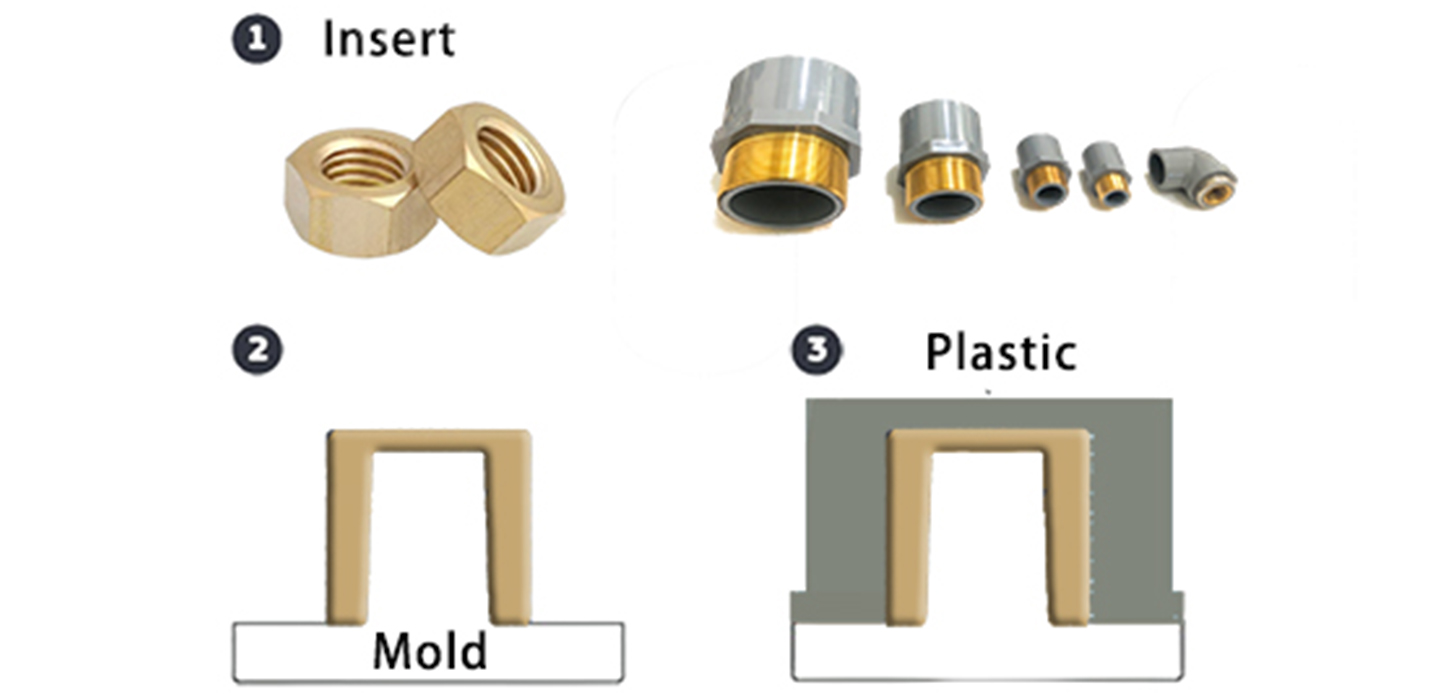
Insert molding is to place pre-formed inserts of metal, plastic and other materials at a specific position of the injection mold, and then inject the plastic melt into the mold cavity through the injection molding machine, so that the plastic is molded around the insert, and finally the insert is wrapped in the plastic part to form an integral part. For example, when producing a plastic knob with a metal threaded insert, the metal threaded insert is first placed in the mold, and then the plastic is injected. After the plastic cools, it is tightly combined with the metal insert.

This process mainly relies on the plastic melt to infiltrate the surface of the insert during the flow process and shrink after cooling to hold the insert tightly. During the injection molding process, the plastic melt is filled into the mold cavity under pressure. When it contacts the surface of the insert, a certain adhesion is generated between the melt and the insert. At the same time, the volume of the plastic shrinks when it cools and solidifies, which further holds the insert tightly, forming a firm connection between the insert and the plastic.

Insert Type

Metal Inserts:

Metal Inserts:

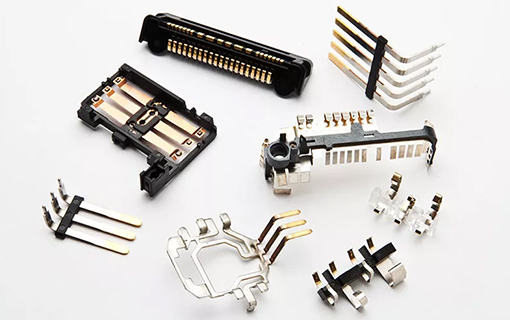
Metal inserts are one of the most common types. For example, in the automotive industry, some plastic interior parts may be embedded with metal sheets to enhance their mechanical properties, such as embedding metal reinforcement sheets in the plastic parts of car door handles to improve their strength and durability. Common metal insert materials include copper, aluminum, steel, etc. Copper inserts have good conductivity and are suitable for products such as electrical connectors; aluminum inserts are light in weight and are more suitable for occasions where weight is required; steel inserts are high in strength and are used for parts that withstand greater external forces.

Plastic Inserts:

Plastic Inserts:

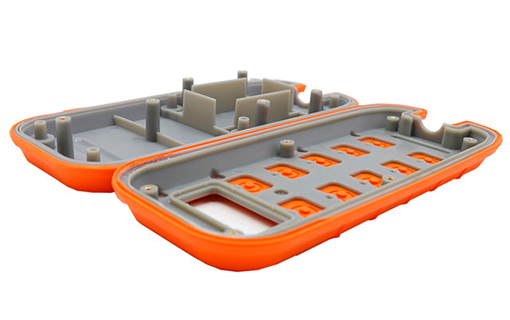
Plastic inserts are sometimes used, mainly to achieve some special functions or shapes. For example, in some multi-layer plastic products, a layer of plastic with special properties (such as high elasticity) is first formed as an insert, and then another plastic is used to cover it to form a product with multiple properties. Or in some plastic products that require two-color or multi-color effects, a plastic part of one color is first formed as an insert, and then another color of plastic is injected for covering, so as to obtain a product with a layered appearance.

Insert Mold Advantages

Multifunctional Product Manufacturing

Combining different material properties: Inserts of hard materials such as metal and ceramic can be combined with plastic. For example, when manufacturing the sensor housing of an automobile, the insulation and easy formability of plastics are combined with the conductivity of metal inserts, so that the sensor housing can protect the internal electronic components from the external environment (such as waterproof and dustproof), and can also realize signal transmission through metal inserts.
Realize complex function integration: By placing inserts of different shapes and functions in the mold, multiple functions can be integrated in one injection molding process. For example, a metal insert with anti-slip texture is added to the plastic handle mold of an electric tool, and a conductive component that can be connected to the internal motor can also be embedded, so that the handle has a good grip and can realize the conductive function, meeting the complex use requirements of the product.

Enhance Product Quality and Reliability

Firm bonding method: During the injection molding process, the plastic melt fills the mold cavity under high pressure and wraps the insert. When the plastic cools and solidifies, due to the principle of thermal expansion and contraction, the plastic will tightly hug the insert to form a tight and firm bond. This combination makes it difficult for the insert to loosen or fall off during the use of the product. For example, a metal nut is embedded in the plastic shell of an electronic product for subsequent circuit board installation and other operations. During the transportation and use of the product, the metal nut can be stably fixed in the plastic shell to ensure the assembly accuracy and reliability of the product.
Reduce the number of parts and assembly errors: Using insert mold can integrate the functions of multiple parts into one injection molded product. Compared with the traditional method of manufacturing each part first and then assembling it through mechanical connection (such as screw connection, riveting, etc.) or glue bonding, insert injection molding reduces the assembly links between parts. For example, if insert injection molding is used to produce a plastic gear with a metal shaft, assembly errors such as non-concentricity between the shaft and the gear that may occur in the traditional assembly method can be avoided, and the quality stability of the product can be improved.

Improve Production Efficiency

One-time molding process: Insert mold is a one-time injection molding process. After the insert is placed in the mold, the product with the insert can be produced through a single injection molding operation. Compared with the method of manufacturing the insert and the plastic part separately and then assembling them, this greatly shortens the production cycle. For example, when producing plastic daily necessities with decorative metal sheets (such as plastic combs with metal brand logos), the use of insert injection molds can directly mold the metal sheet and the comb body at one time, reducing the subsequent additional processes such as pasting the metal sheet and improving production efficiency.
Great potential for automated production: This mold can be easily matched with automated injection molding equipment if it is designed reasonably. The insert can be accurately placed in the mold by an automated robotic arm, and then the injection molding operation can be performed to achieve efficient and continuous automated production. For example, in some large plastic product production factories, for insert injection products with regular shapes and mass production (such as plastic bottle caps with metal inserts), automated production lines can be used to produce a large number of qualified products per hour, improving the economic efficiency of production.