
 EN
EN
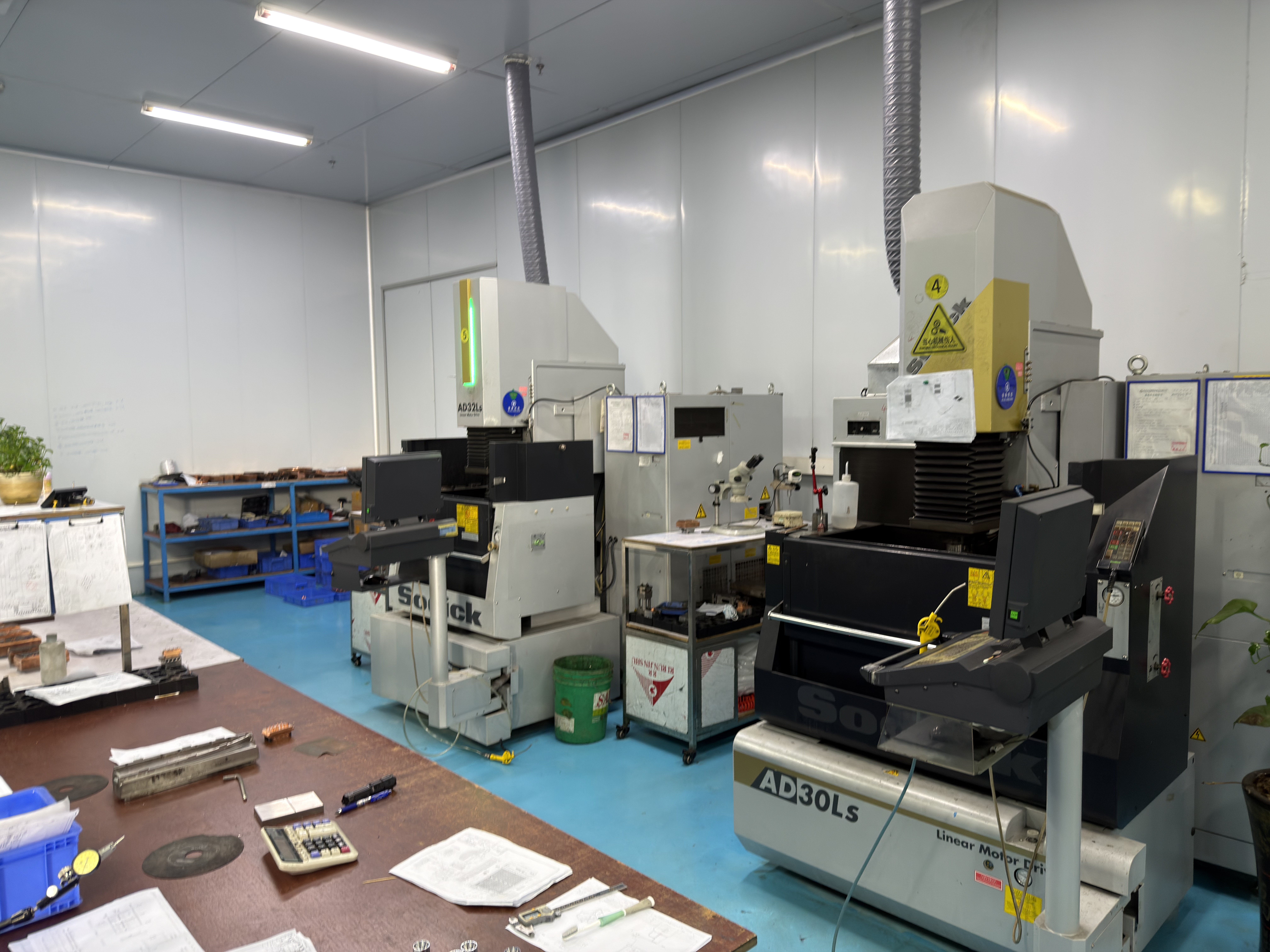
When businesses set out to develop a new physical product, the path from concept to finished part is rarely straightforward. One of the most critical enabling technologies along that path is mold making. Whether a company is designing a consumer electronic enclosure, a medical device component, or an industrial fitting, mold making provides the foundational infrastructure that transforms a digital design into a repeatable, tangible, high-quality part. Without precision tooling at the core of the development workflow, achieving dimensional consistency, material integrity, and production scalability would be extraordinarily difficult.
The role of mold making in custom product development extends far beyond simply shaping raw material into a desired form. It sits at the intersection of engineering precision, material science, and production strategy. When done correctly, mold making accelerates time-to-market, reduces per-unit cost at scale, and gives product teams the confidence they need to move from prototyping through to full commercial production. Understanding how this process works — and why it matters — is essential knowledge for any team managing a custom development project.
The Foundational Role of Mold Making in the Product Development Lifecycle
Bridging Design and Physical Production
Custom product development typically begins with CAD models, renders, and functional specifications. While these digital assets define the intent of a product, they cannot by themselves produce a physical part in volume. This is where mold making enters the picture. By translating a digital geometry into a precision-machined cavity and core, toolmakers create the mechanism that can reliably reproduce that geometry in metal, plastic, rubber, or composite material thousands or even millions of times.
The bridge that mold making provides between the design stage and physical manufacturing is not merely mechanical — it is also analytical. Experienced toolmakers review part geometries for moldability issues such as undercuts, thin walls, insufficient draft angles, and problematic gate locations. This early-stage design-for-manufacturability feedback prevents costly engineering changes later in the project lifecycle. A product development team that integrates mold making expertise early gains a significant structural advantage over teams that treat tooling as an afterthought.
Each mold is essentially a customized manufacturing asset engineered to produce one specific part or family of parts. This bespoke nature makes mold making uniquely suited to custom development projects where off-the-shelf tooling is never an option. The investment in a custom mold is, in effect, an investment in the production infrastructure for that product's entire commercial life.
Enabling Design Iteration Without Starting Over
One of the most practical contributions of modern mold making to custom product development is its support for iterative design. In the past, modifying a mold meant discarding it and starting from scratch — an expensive and time-consuming reality. Today, with high-precision CNC machining, EDM processes, and modular mold insert systems, design iterations can be accommodated without building an entirely new tool. Engineers can modify individual inserts, adjust cavity dimensions, or reposition gates and runners to refine part performance.
This iterative capability means that a product development project can progress through multiple design refinement cycles while keeping tooling costs under control. A first-article part might reveal surface finish issues, wall thickness concerns, or dimensional deviations that the engineering team needs to address. A skilled mold making team can diagnose those issues and execute targeted modifications, producing updated samples for evaluation without wasting the entire tooling investment.
This iterative loop — design, tool, sample, evaluate, refine — is the heartbeat of serious custom product development. Mold making is not a one-time event in this process; it is an ongoing technical partnership between the toolmaker and the product engineering team.
How Mold Making Supports Prototyping and Pre-Production Validation
From Rapid Prototyping to Production-Intent Tooling
Many product development projects begin with rapid prototyping methods such as 3D printing or CNC-machined samples to validate form and fit. While these methods are valuable for early-stage concepts, they cannot replicate the material properties, surface quality, or dimensional tolerances achievable through production-intent mold making. A part produced from a steel injection mold behaves fundamentally differently from one produced by FDM printing, even if the geometry is identical.
As a custom product moves through development, teams typically commission prototype or soft tooling — molds made from aluminum or pre-hardened steel — to produce small volumes of parts that closely simulate final production output. This stage of mold making is critical for functional testing, assembly validation, regulatory submission, and customer approval. The data generated from prototype tooling informs the final production mold design, reducing risk and improving first-time quality when the full production tool is commissioned.
Prototype molds in a mold making workflow are not just a step toward the final tool — they are a quality assurance mechanism. They allow development teams to make confident decisions about materials, finishes, tolerances, and processing parameters before committing to the larger capital expenditure of a production-grade hardened steel mold.
Validating Material and Process Compatibility
Custom product development often involves selecting materials that must meet specific performance requirements — chemical resistance, thermal stability, mechanical strength, or regulatory compliance. Mold making plays a direct role in validating whether a chosen material processes correctly under injection molding, compression molding, or overmolding conditions. Variables such as mold temperature, injection pressure, cooling time, and venting must all be optimized through systematic trials using the actual production mold or its prototype equivalent.
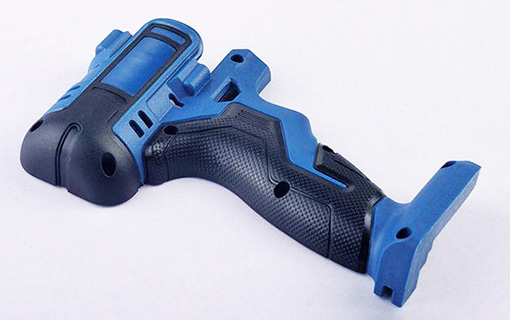
A well-designed mold, produced through careful mold making practice, gives process engineers the control they need to conduct these trials systematically. Properly engineered cooling channels, balanced runner systems, and correctly sized gates all influence how a material fills and solidifies in the mold. Without this precision, material behavior in the cavity becomes unpredictable, leading to defects such as warpage, sink marks, short shots, or internal voids.
For product development projects that involve technically demanding materials — such as glass-filled nylons, PEEK, or liquid silicone rubber — the quality of the mold making directly determines whether the material can be processed reliably. This makes tooling quality a technical prerequisite, not just a production convenience.
Scaling Custom Products from Development to Commercial Volume
The Transition from Pilot to Full Production
A custom product that passes development validation must eventually be manufactured at commercial volumes with consistent quality. This transition is only possible because mold making creates a stable, repeatable production system. Unlike other manufacturing methods where output quality can drift depending on operator skill or machine condition, a well-maintained injection mold produces parts with consistent geometry and surface quality across millions of cycles.
The scalability inherent in mold making is one of its most commercially valuable characteristics for product development projects. Once a production-grade mold is qualified and validated, the per-unit cost drops dramatically as volume increases. The tooling investment, which may appear significant in the development budget, amortizes rapidly across production runs. Teams building business cases for custom products must factor this cost structure into their financial models to accurately project profitability at scale.
Multi-cavity molds — tools that produce multiple identical parts in a single machine cycle — further amplify the output efficiency of mold making at volume. A product development project that anticipates high demand should work with its tooling partner during the design phase to determine the optimal cavity count and mold configuration for the projected production volumes.
Maintaining Quality and Traceability Across Production Batches
Commercial production of a custom product depends not only on volume capability but also on consistent quality over time. Mold making practices that incorporate proper steel selection, precision heat treatment, hardness specification, and surface coating ensure that molds maintain their dimensional accuracy across extended production runs. A mold that degrades quickly due to inferior tooling materials will produce parts that drift out of specification, creating quality escapes that damage brand reputation and customer relationships.
Traceability is another dimension where mold making discipline supports product development goals. High-quality toolmaking operations document cavity geometry, processing parameters, and maintenance histories, enabling production teams to identify the root cause of quality deviations and restore conformance quickly. This traceability infrastructure is especially important in regulated industries such as medical devices, automotive components, and food-contact applications where documentation requirements are stringent.
For product development teams, partnering with a mold making supplier that maintains rigorous quality management systems provides an ongoing assurance that the production infrastructure behind their product will remain reliable throughout the product's commercial lifecycle.
Strategic Advantages of Integrating Mold Making Early in Development
Reducing Total Development Cost and Timeline
One of the most common mistakes in custom product development is treating mold making as a late-stage procurement activity rather than a core engineering discipline. Teams that engage tooling experts early — during conceptual design or at the first CAD review stage — consistently achieve shorter development cycles and lower overall tooling costs. Early involvement allows toolmakers to flag design issues before they become embedded in the engineering baseline, where changes carry exponentially higher cost implications.
Concurrent engineering approaches, where product designers and mold making specialists work in parallel rather than sequentially, compress the development timeline significantly. While the design team is finalizing geometry, the tooling team can be specifying steel grades, planning machining sequences, and ordering long-lead mold components. This overlap eliminates weeks or months from the critical path, accelerating the launch of the custom product to market.
The cumulative financial benefit of early mold making integration is substantial. Fewer engineering change orders, less rework on tooling, shorter sampling cycles, and faster qualification all reduce the total cost of bringing a custom product to commercial readiness.
Supporting Intellectual Property and Competitive Differentiation
Custom molds are proprietary manufacturing assets that embody a product's unique geometry, texture, and functional features. Unlike generic tooling, a custom mold cannot be used to produce a competitor's product. This exclusivity is a direct competitive advantage for companies investing in mold making for their product development projects. The mold becomes a physical representation of the product's intellectual property, capable of consistently reproducing design elements that would be difficult or impossible to replicate through reverse engineering at production volumes.
Surface textures, logos, part numbers, and fine geometric features can all be incorporated directly into a mold during the mold making process. These features appear automatically on every part produced, without additional secondary operations. For branding-conscious companies, the ability to mold distinctive visual and tactile elements into their products is a significant differentiation tool that mold making uniquely enables.
When companies own their molds outright, they also gain flexibility in sourcing. A proprietary mold can be transferred to a different manufacturing partner if business conditions change, protecting continuity of supply without requiring the product to be redesigned or re-tooled. This strategic asset control is an important consideration for long-term product development planning.
FAQ
What types of products are best suited for custom mold making in development projects?
Custom mold making is most valuable for products that require high dimensional consistency, complex geometry, specific material properties, or large production volumes. Typical examples include plastic enclosures, rubber seals, medical device components, automotive interior parts, and consumer goods housings. If a product will be produced in quantities exceeding a few hundred units and requires tight tolerances or specific surface finishes, custom mold making is almost always the most cost-effective and quality-reliable manufacturing approach.
How early in the product development process should mold making be considered?
Ideally, mold making expertise should be brought into the project during the conceptual or early detailed design stage — well before the geometry is finalized. Early engagement allows toolmakers to provide design-for-manufacturability feedback that prevents costly redesigns. Waiting until after design freeze to begin tooling discussions often results in expensive tool modifications, extended sampling cycles, and delayed market launch.
What is the difference between prototype tooling and production tooling in mold making?
Prototype tooling, often made from aluminum or softer steel, is designed for low-volume part production during development and validation phases. It is faster and less expensive to produce than production tooling, making it ideal for functional testing and pre-launch validation. Production tooling is made from hardened steel and engineered to withstand hundreds of thousands to millions of cycles with minimal wear. It delivers higher dimensional consistency and surface quality, making it the standard for commercial-scale manufacturing.
How does mold making affect the per-unit cost of a custom product?
Mold making involves a significant upfront tooling investment, but this cost amortizes across the production volume. As production quantities increase, the tooling cost per unit decreases rapidly, and injection molding typically delivers very low material and cycle costs per part. For most custom products intended for medium to high production volumes, the total cost of ownership — tooling plus per-unit production cost — is substantially lower than alternative manufacturing methods such as CNC machining or 3D printing at scale.
Table of Contents
- The Foundational Role of Mold Making in the Product Development Lifecycle
- How Mold Making Supports Prototyping and Pre-Production Validation
- Scaling Custom Products from Development to Commercial Volume
- Strategic Advantages of Integrating Mold Making Early in Development
-
FAQ
- What types of products are best suited for custom mold making in development projects?
- How early in the product development process should mold making be considered?
- What is the difference between prototype tooling and production tooling in mold making?
- How does mold making affect the per-unit cost of a custom product?
