
 EN
EN

Manufacturers across industries face a persistent challenge: how to scale production efficiently while maintaining product quality, controlling costs, and meeting rapidly changing market demands. The answer increasingly lies in plastic moulding, a manufacturing process that has become the backbone of scalable production systems worldwide. From automotive components to consumer electronics, medical devices to packaging solutions, plastic moulding enables companies to produce thousands or millions of identical parts with remarkable precision and speed. This manufacturing method offers a unique combination of versatility, repeatability, and economic efficiency that few other production techniques can match, making it indispensable for businesses aiming to grow their output without compromising quality or profitability.
The reliance on plastic moulding for scalable production stems from fundamental business and technical advantages that directly address manufacturing scalability requirements. Unlike traditional machining or fabrication methods that require extensive manual intervention and time-consuming individual part creation, plastic moulding transforms raw polymer materials into finished components through automated, repeatable cycles. This process allows manufacturers to establish production lines capable of running continuously with minimal supervision, producing parts at rates that can reach thousands per hour depending on complexity and mould design. The economic logic becomes compelling when production volumes increase: while initial tooling investments may be substantial, the per-unit cost decreases dramatically as volume scales, creating a cost structure that favors mass production and supports competitive pricing strategies in global markets.
The Economic Foundation of Plastic Moulding in Mass Production
Capital Investment and Cost Recovery Models
The economic viability of plastic moulding for scalable production rests on a distinctive cost structure that rewards volume manufacturing. Initial investments in mould tooling can range from several thousand to hundreds of thousands of dollars depending on part complexity, cavity count, and precision requirements. However, this upfront capital expenditure becomes distributed across production volume, creating a declining cost curve that makes high-volume manufacturing increasingly economical. Manufacturers understand that once a mould is commissioned and validated, each subsequent part produced represents only the material cost, machine time, and minimal labor, resulting in per-unit costs that can be measured in cents rather than dollars. This cost recovery model fundamentally enables scalability because it removes the linear relationship between volume and cost that constrains many other manufacturing methods.
The financial advantage becomes particularly pronounced when comparing plastic moulding to alternative manufacturing approaches. Traditional machining requires individual attention for each part, with labor and machine time scaling directly with quantity. Fabrication methods like welding or assembly involve manual operations that limit throughput and introduce variability. In contrast, plastic moulding achieves economies of scale that improve with volume, allowing manufacturers to offer competitive pricing while maintaining healthy margins. This economic foundation explains why industries with high-volume requirements consistently choose plastic moulding as their primary production method, and why companies seeking to scale their operations invest in mould tooling despite the initial capital requirement.
Material Cost Efficiency and Supply Chain Advantages
Plastic moulding offers manufacturers significant advantages in material utilization and supply chain management that directly support scalable production. Modern plastic moulding processes achieve material utilization rates often exceeding ninety-five percent, with minimal waste generated during production. Thermoplastic materials, which represent the majority of moulding applications, can often be reground and reprocessed, further reducing material costs and environmental impact. This efficiency contrasts sharply with subtractive manufacturing methods where significant portions of raw material become waste chips or scrap. For manufacturers producing millions of components annually, these material savings translate into substantial cost reductions and improved sustainability metrics that increasingly matter to customers and stakeholders.
The global availability and standardization of plastic resins creates supply chain flexibility that supports scalable manufacturing operations. Manufacturers can source materials from multiple suppliers across different regions, reducing dependency risks and enabling strategic procurement that responds to market conditions. The commodity nature of many engineering plastics means that material specifications are standardized and reliable, allowing manufacturers to switch suppliers without requiring extensive requalification processes. This supply chain flexibility becomes critical when scaling production, as it ensures that material availability never becomes a bottleneck limiting output capacity. Additionally, the relatively lower cost of plastic materials compared to metals or other alternatives enables manufacturers to maintain inventory buffers without tying up excessive working capital.
Technical Capabilities That Enable Production Scaling
Design Flexibility and Complex Geometry Achievement
The technical versatility of plastic moulding provides manufacturers with design freedom that directly facilitates product innovation and market responsiveness, both essential for scalable business growth. Unlike manufacturing processes constrained by tool access, cutting forces, or assembly limitations, plastic moulding can produce components with complex internal features, undercuts, varying wall thicknesses, and integrated functions that would require multiple operations or assembled components using other methods. This design flexibility allows engineers to optimize parts for performance and functionality while simultaneously designing for manufacturability at scale. The ability to consolidate multiple components into single moulded parts reduces assembly operations, lowers inventory complexity, and improves product reliability through fewer potential failure points.
Advanced mould technologies including multi-cavity designs, family moulds, and sequential gating systems enable manufacturers to produce multiple parts or part variations simultaneously within a single production cycle. This capability dramatically increases throughput while maintaining precision across all cavities, a critical factor when scaling production to meet growing demand. The integration of features like living hinges, snap fits, and textured surfaces directly into the moulding process eliminates secondary operations that would otherwise limit production rates and increase costs. Manufacturers leverage this design flexibility to create product families with shared tooling platforms, reducing the capital investment required to offer market variety while maintaining the production efficiency that scalability demands.
Process Repeatability and Quality Consistency
Manufacturing scalability fundamentally depends on the ability to produce consistent quality across large volumes, and plastic moulding delivers this repeatability through precise control of process parameters and automated production sequences. Modern injection moulding machines monitor and control dozens of variables including temperature profiles, injection pressure, hold time, cooling rates, and cycle timing with precision measured in fractions of degrees and milliseconds. This process control ensures that part number one thousand matches part number one in dimensional accuracy, material properties, and surface finish. For manufacturers, this consistency eliminates the quality variation that plagues manual processes and reduces the inspection burden required to ensure customer specifications are met.
The automated nature of plastic moulding cycles removes human variability from the production equation, a critical advantage when scaling to high volumes. Once process parameters are established and validated during initial production trials, the manufacturing system can replicate those conditions indefinitely without drift or degradation. Statistical process control systems integrated with modern moulding equipment provide real-time monitoring and automatically adjust parameters to compensate for minor variations in material properties or ambient conditions. This self-correcting capability ensures that quality remains stable across production shifts, equipment changeovers, and extended production runs spanning weeks or months. Manufacturers scaling their operations recognize that this built-in quality consistency reduces the cost of quality management and minimizes the risk of costly recalls or customer returns.
Operational Efficiency Advantages for High-Volume Manufacturing
Cycle Time Optimization and Throughput Maximization
The rapid cycle times achievable with plastic moulding create production throughput that few alternative manufacturing methods can approach, making it the preferred choice for manufacturers requiring volume scalability. Depending on part geometry and material selection, complete moulding cycles from injection through part ejection can be measured in seconds rather than minutes, with simple components achieving cycle times under ten seconds and more complex parts typically completing within one to two minutes. When multiplied across multi-cavity moulds producing four, eight, sixteen, or more parts per cycle, the production capacity becomes formidable. A single moulding machine operating continuously can produce tens of thousands of parts daily, a production rate that would require dozens of operators and machines using traditional manufacturing approaches.
Manufacturers optimize cycle times through sophisticated cooling system design, material selection, and process parameter tuning, continuously improving productivity as production scales. Advanced conformal cooling channels that follow part geometry reduce cooling time while improving part quality by ensuring uniform temperature distribution. Hot runner systems eliminate the time required to solidify and remove runner systems, further reducing cycle time and material waste. These technical refinements become economically justified at scale because the productivity improvements apply to every cycle across millions of parts. The cumulative effect of reducing cycle time by even a few seconds translates into substantial increases in annual production capacity without requiring additional capital equipment investment.
Labor Efficiency and Automation Integration
Plastic moulding operations achieve remarkable labor efficiency through automation, a critical factor enabling manufacturers to scale production without proportionally increasing workforce requirements. Modern moulding cells operate with minimal direct labor involvement, with a single operator often supervising multiple machines simultaneously. Robotic systems handle part removal, quality inspection, secondary operations, and packaging, creating essentially autonomous production cells that run continuously with only periodic monitoring. This automation capability addresses one of the fundamental challenges of scalable manufacturing: the difficulty and cost of recruiting, training, and managing large production workforces. By minimizing labor content per part, plastic moulding enables manufacturers to scale output based on capital investment in equipment rather than labor availability.
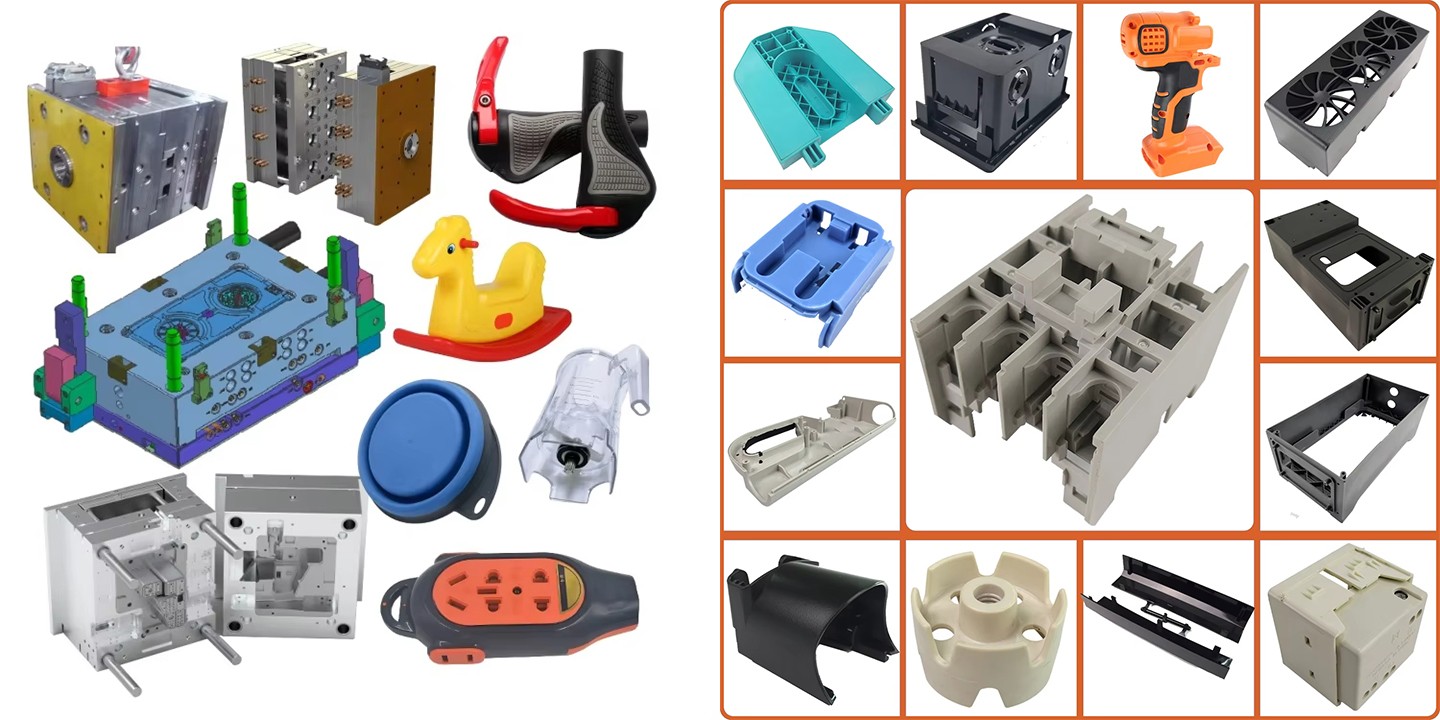
The integration of plastic moulding with automated material handling, quality inspection, and data collection systems creates smart manufacturing environments that support continuous production scaling. Automated material drying and feeding systems ensure consistent material quality while eliminating manual material handling. Vision inspection systems check every part for dimensional accuracy and surface defects at production speed, something impossible with manual inspection at high volumes. Manufacturing execution systems track production metrics, machine performance, and quality data in real time, providing the visibility needed to optimize operations and identify improvement opportunities. These integrated automation capabilities transform plastic moulding operations into highly efficient production systems where output scales primarily with equipment capacity rather than labor availability or management complexity.
Strategic Business Advantages Supporting Growth and Market Response
Speed to Market and Product Iteration Capability
Manufacturers rely on plastic moulding for scalable production because it enables rapid market response and product iteration that competitive markets increasingly demand. Once mould tooling is completed, production can ramp from prototype quantities to full-scale manufacturing within weeks, a timeline that supports aggressive product launch schedules and market opportunities. This speed to volume production allows companies to capitalize on market trends, respond to competitive pressures, and establish market presence before windows of opportunity close. The ability to scale quickly from initial market testing to mass production reduces the risk of market timing failures and enables manufacturers to optimize production volumes based on actual demand rather than speculative forecasts.
The relatively straightforward process of modifying existing moulds to accommodate design changes gives manufacturers flexibility to refine products based on market feedback without restarting the entire tooling process. Engineering changes that improve functionality, reduce cost, or address customer requirements can often be implemented through mould modifications rather than complete retooling, preserving the capital investment while enabling continuous product improvement. This iteration capability becomes increasingly valuable as product lifecycles shorten and customer expectations for customization increase. Manufacturers using plastic moulding can offer product variants, regional adaptations, and application-specific modifications while maintaining the production efficiency that scalability requires.
Geographic Distribution and Localized Production
The global standardization of plastic moulding technology and equipment enables manufacturers to establish distributed production networks that support international market expansion and supply chain resilience. Mould tooling can be replicated or transferred between facilities in different regions, allowing companies to produce identical components in multiple locations to serve regional markets, reduce logistics costs, and mitigate geopolitical risks. This geographic flexibility supports scalable business models where production capacity expands through facility additions rather than single-site expansion, distributing risk and improving customer responsiveness. Manufacturers serving global markets increasingly adopt this distributed production approach, using plastic moulding as the common manufacturing platform that ensures quality consistency across facilities.
The ability to establish localized production using plastic moulding addresses both economic and strategic considerations that influence scalable manufacturing decisions. Producing components near end markets reduces transportation costs, shortens delivery lead times, and minimizes inventory requirements throughout the supply chain. Localized production also addresses trade considerations, tariff structures, and regulatory requirements that increasingly influence manufacturing location decisions. For manufacturers scaling their business internationally, plastic moulding provides a proven, transferable manufacturing technology that can be implemented in diverse locations with confidence in achieving consistent quality and productivity outcomes.
Material Science Advances Expanding Application Scope
Engineering Plastics Performance Evolution
The continuous development of advanced engineering plastics with enhanced performance characteristics expands the application scope of plastic moulding, enabling manufacturers to address market segments previously dominated by metal or other materials. Modern engineering polymers offer mechanical properties approaching metals, thermal stability exceeding two hundred degrees Celsius, chemical resistance suitable for harsh environments, and electrical properties ranging from insulative to conductive depending on application requirements. This materials evolution allows manufacturers to design products where plastic moulding becomes viable for demanding applications, opening new markets while leveraging the scalability advantages inherent in the process. Industries including automotive, aerospace, medical devices, and industrial equipment increasingly specify engineering plastics where metals were traditionally required, driven by weight reduction goals, cost considerations, and design flexibility advantages.
The availability of specialized plastic formulations tailored to specific application requirements gives manufacturers material options that optimize both product performance and manufacturing efficiency. Reinforced plastics incorporating glass fibers, carbon fibers, or mineral fillers provide enhanced stiffness and strength while maintaining the processing advantages of plastic moulding. Specialty additives enable properties including UV resistance, flame retardancy, antimicrobial characteristics, and electrical conductivity. This materials palette allows engineers to select plastics that precisely match application requirements while designing for efficient, scalable production using plastic moulding. The expanding performance envelope of engineering plastics continuously creates new opportunities for manufacturers to apply plastic moulding in applications where it delivers superior value propositions compared to alternative materials and processes.
Sustainability and Circular Economy Alignment
Manufacturers increasingly rely on plastic moulding for scalable production because it aligns with sustainability objectives that influence purchasing decisions, regulatory compliance, and corporate responsibility commitments. The material efficiency inherent in plastic moulding minimizes waste generation during production, an important consideration as environmental regulations tighten and waste disposal costs increase. The development of bio-based plastics derived from renewable resources and recycled plastic resins with performance approaching virgin materials creates options for manufacturers seeking to reduce environmental footprint without compromising product quality or production efficiency. Plastic moulding processes accommodate these sustainable materials effectively, enabling manufacturers to respond to market demands for environmentally responsible products while maintaining the scalability advantages that drive their manufacturing strategies.
The design flexibility of plastic moulding supports product strategies focused on durability, repairability, and end-of-life recycling, all elements of circular economy principles gaining prominence in industrial markets. Components can be designed with features facilitating disassembly, material identification markings for sorting, and construction using single material types that simplify recycling. The lightweight characteristics of plastic components reduce transportation energy throughout product lifecycles, an increasingly important sustainability metric. These environmental considerations complement rather than conflict with the scalability advantages of plastic moulding, allowing manufacturers to pursue both business growth and sustainability objectives simultaneously. As environmental considerations increasingly influence procurement decisions and regulatory frameworks, the alignment of plastic moulding with sustainability principles strengthens its position as the preferred manufacturing method for scalable production.
FAQ
What production volumes make plastic moulding economically viable compared to other manufacturing methods?
Plastic moulding typically becomes economically advantageous when production quantities exceed several thousand parts annually, though the exact threshold depends on part complexity, material selection, and alternative manufacturing options. The initial investment in mould tooling, which can range from five thousand to over one hundred thousand dollars, must be recovered through per-unit cost savings. Simple parts with lower tooling costs may justify plastic moulding at volumes as low as five thousand parts, while complex components requiring expensive multi-cavity moulds may require quantities exceeding fifty thousand parts to achieve favorable economics. The key consideration is that per-unit costs decrease as volume increases, making plastic moulding progressively more competitive at higher volumes. Manufacturers evaluating whether plastic moulding suits their production requirements should conduct break-even analysis comparing total cost including tooling amortization against alternative methods across anticipated production volumes and timeframes.
How quickly can manufacturers scale plastic moulding production to meet sudden demand increases?
Production scaling speed in plastic moulding depends primarily on equipment capacity utilization and tooling availability rather than process limitations. Manufacturers operating below full capacity can increase output immediately by extending machine operating hours, adding production shifts, or reducing planned downtime for maintenance. Facilities running near capacity can scale production within weeks by transferring existing moulds to additional machines, though this requires available equipment with appropriate specifications. Creating additional production capacity through new tooling typically requires eight to sixteen weeks depending on mould complexity, though expedited schedules can reduce this timeline. The most responsive scaling approach involves designing moulds with additional cavities beyond immediate requirements, allowing manufacturers to activate dormant cavities when demand increases without requiring new tooling. Strategic manufacturers maintain relationships with multiple moulding service providers who can absorb overflow production during demand spikes, creating flexible capacity without capital investment.
What quality control challenges arise when scaling plastic moulding production to very high volumes?
Maintaining consistent quality across millions of parts requires systematic process control, comprehensive inspection strategies, and proactive maintenance programs that prevent quality drift during extended production runs. The primary challenges include material property variation between different resin lots, gradual mould wear affecting dimensions, process parameter drift across production shifts, and the statistical difficulty of detecting rare defects in high-volume production. Successful manufacturers address these challenges through incoming material inspection and testing, regular preventive maintenance schedules for moulds and equipment, statistical process control monitoring critical dimensions and properties, and automated inspection systems that check every part for key characteristics. Advanced quality management systems track production metrics and trigger interventions when trends indicate potential quality issues before defects occur. The automation inherent in plastic moulding actually facilitates quality consistency at high volumes because it eliminates human variability, making properly controlled moulding operations more consistent than manual manufacturing processes.
Can plastic moulding accommodate product customization while maintaining production scalability?
Modern plastic moulding techniques enable significant product customization while preserving the efficiency advantages that support scalable production. Family moulds producing multiple part variations simultaneously allow manufacturers to offer product choices without sacrificing production efficiency. Interchangeable mould inserts enable rapid changeover between product variants, with change times measured in minutes rather than hours. Overmoulding and two-shot moulding processes create products combining multiple materials or colors in single operations, enabling customization without assembly operations. Surface decoration techniques including in-mould labeling, film insert moulding, and pad printing apply custom graphics during the moulding cycle itself. These techniques allow manufacturers to offer customized products addressing specific customer requirements or market segments while maintaining the automated, high-volume production approach that makes plastic moulding economically attractive. The key is designing product architectures and tooling strategies that accommodate variation without requiring complete retooling or introducing manual operations that limit throughput.
Table of Contents
- The Economic Foundation of Plastic Moulding in Mass Production
- Technical Capabilities That Enable Production Scaling
- Operational Efficiency Advantages for High-Volume Manufacturing
- Strategic Business Advantages Supporting Growth and Market Response
- Material Science Advances Expanding Application Scope
-
FAQ
- What production volumes make plastic moulding economically viable compared to other manufacturing methods?
- How quickly can manufacturers scale plastic moulding production to meet sudden demand increases?
- What quality control challenges arise when scaling plastic moulding production to very high volumes?
- Can plastic moulding accommodate product customization while maintaining production scalability?
