
 EN
EN
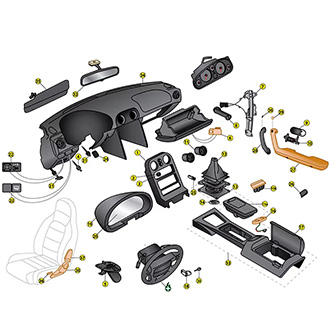
In modern manufacturing, the pressure to produce more in less time without sacrificing quality has never been greater. plastic injection mold technology has emerged as one of the most reliable answers to that challenge. By enabling the rapid, repeatable production of complex plastic components, this process has fundamentally changed how manufacturers approach volume output, cost control, and product consistency across a wide range of industries.
Understanding how plastic injection mold technology improves production efficiency requires looking beyond the machine itself. The gains come from a combination of precision tooling, optimized cycle times, reduced material waste, and the ability to automate critical stages of the manufacturing workflow. Each of these factors compounds on the others, creating a production environment where throughput increases while defect rates and operational costs decline simultaneously.
The Mechanism Behind Plastic Injection Mold Efficiency
How the Injection Molding Cycle Drives Speed
The core of plastic injection mold efficiency lies in its cycle structure. Each cycle consists of clamping, injection, cooling, and ejection — a sequence that can be completed in seconds for smaller parts. Because the process is highly automated and each stage is precisely timed, manufacturers can achieve consistent output rates that manual or semi-manual processes simply cannot match.
Modern plastic injection mold systems use servo-driven machinery and real-time process monitoring to minimize cycle time without introducing variability. The result is a production line that operates at a predictable, high-volume pace. For B2B buyers managing large orders or tight delivery windows, this predictability is as valuable as the speed itself.
Cycle time optimization is not a one-time setup task. Engineers continuously refine injection pressure, melt temperature, and cooling duration to shave fractions of a second from each cycle. Over thousands of production runs, those fractions translate into significant gains in total output per shift.
Precision Tooling and Its Role in Reducing Downtime
A well-engineered plastic injection mold is built to tight dimensional tolerances, which directly reduces the frequency of rejects, rework, and line stoppages. When the mold cavity is accurate, each part comes out within specification, and the need for secondary inspection or correction is minimized. This keeps the production line moving without interruption.
High-quality tooling also extends mold lifespan, which means fewer changeovers and less unplanned downtime. A plastic injection mold designed for high-volume production can run hundreds of thousands of cycles before requiring maintenance, making it a long-term efficiency asset rather than a recurring cost center.
The relationship between tooling precision and production efficiency is direct. Investing in better mold design upfront reduces the operational friction that accumulates over a production run — fewer rejects, fewer adjustments, and fewer interruptions to the manufacturing schedule.
Material Utilization and Waste Reduction
How Plastic Injection Mold Technology Minimizes Material Waste
One of the less visible but highly impactful ways plastic injection mold technology improves efficiency is through material control. The process injects a precisely measured volume of molten plastic into a closed mold cavity, which means there is very little excess material generated per part. Compared to subtractive manufacturing methods, the waste profile is dramatically lower.
Runner systems in plastic injection mold tooling have also evolved significantly. Hot runner systems, in particular, eliminate the solidified plastic channels that cold runner systems produce, reducing material scrap to near zero. For manufacturers working with expensive engineering-grade resins, this reduction in waste has a direct and measurable impact on per-unit cost.
Efficient material use also means fewer raw material procurement cycles and less storage overhead. When a plastic injection mold process is dialed in correctly, the bill of materials becomes highly predictable, which simplifies supply chain planning and reduces the risk of production delays caused by material shortfalls.
Regrind and Closed-Loop Material Management
In operations where some scrap is unavoidable, plastic injection mold facilities often implement regrind programs that recycle sprues and runners back into the production stream. This closed-loop approach further reduces material costs and aligns with sustainability goals that are increasingly important to B2B procurement teams.
Managing regrind ratios carefully ensures that recycled material does not compromise part quality. Experienced process engineers set strict limits on regrind percentages and monitor material properties to maintain consistency. This balance between efficiency and quality control is a hallmark of mature plastic injection mold operations.
Automation Integration and Labor Efficiency
Robotic Handling and Automated Part Removal
Modern plastic injection mold cells are rarely standalone machines. They are integrated systems that include robotic arms for part removal, conveyor systems for downstream handling, and vision systems for inline quality inspection. This level of automation removes labor-intensive steps from the production process and allows a single operator to oversee multiple machines simultaneously.
Robotic part removal is particularly valuable in high-speed plastic injection mold applications where cycle times are short and manual handling would create a bottleneck. Robots can extract parts, orient them for downstream assembly, and place them into packaging or inspection stations without slowing the molding cycle. The net effect is a significant increase in output per labor hour.
Automation also reduces the risk of human error in part handling, which is a common source of cosmetic defects and dimensional inconsistencies. When a plastic injection mold cell operates with consistent robotic handling, the quality of the finished parts is more uniform, and the reject rate at final inspection drops accordingly.
Process Monitoring and Adaptive Control Systems
Advanced plastic injection mold machines are equipped with sensors that monitor injection pressure, melt temperature, mold temperature, and clamp force in real time. These data streams feed into adaptive control systems that make micro-adjustments during each cycle to maintain process stability. The result is a self-correcting production environment that sustains efficiency even as ambient conditions or material batches vary.
Process monitoring also generates data that engineers can analyze to identify efficiency bottlenecks. If a particular plastic injection mold is consistently running longer cooling times than expected, the data will surface that pattern, allowing targeted intervention before it becomes a production problem. This proactive approach to process management is a key driver of sustained efficiency gains.
For B2B manufacturers operating under quality management systems, the traceability provided by process monitoring data is an additional benefit. Every production run can be documented with process parameters, making it easier to investigate quality issues and demonstrate compliance with customer or regulatory requirements.
Scalability and Multi-Cavity Mold Design
Multiplying Output Through Multi-Cavity Tooling
One of the most direct ways plastic injection mold technology scales production efficiency is through multi-cavity mold design. Rather than producing one part per cycle, a multi-cavity mold produces two, four, eight, or even more identical parts simultaneously. The cycle time increases only marginally, but the output per cycle multiplies proportionally.
For high-volume components such as connectors, caps, housings, or medical consumables, multi-cavity plastic injection mold tooling is the standard approach. It allows manufacturers to meet large order volumes without proportionally increasing machine time, energy consumption, or labor requirements. The economics of multi-cavity production are compelling for any B2B operation managing significant part volumes.
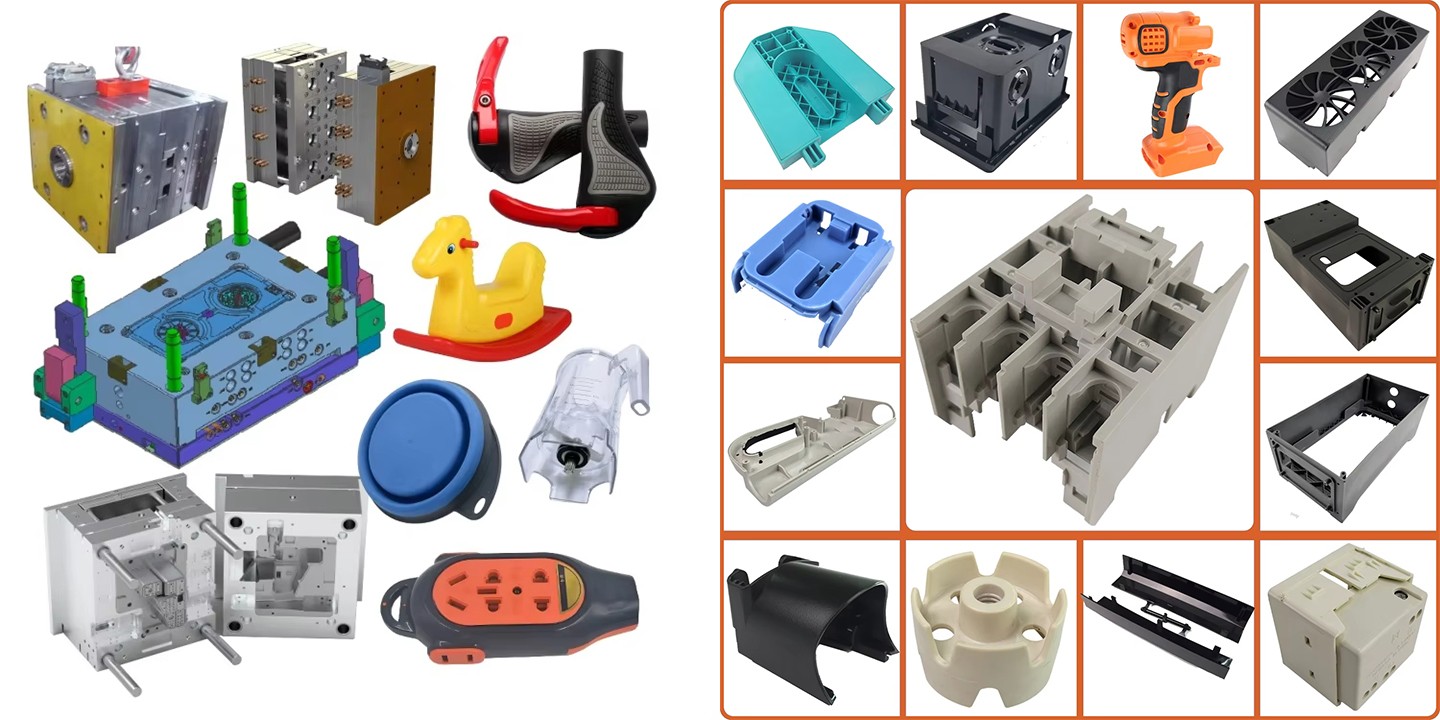
Designing a balanced multi-cavity plastic injection mold requires careful attention to runner layout, gate positioning, and cooling channel geometry. When these elements are engineered correctly, all cavities fill simultaneously and uniformly, ensuring that every part in every cycle meets the same dimensional and cosmetic standards.
Family Molds and Assembly Efficiency
Family molds take the multi-cavity concept further by producing different but related components in a single plastic injection mold cycle. For assemblies that require multiple plastic parts, a family mold can produce all of them simultaneously, eliminating the need to run separate molds and coordinate inventory between production runs.
This approach reduces tooling investment, simplifies scheduling, and ensures that mating components are always produced in matched quantities. For manufacturers supplying assembled products to their customers, the efficiency gains from family mold plastic injection mold tooling extend well beyond the molding cell itself and into the broader supply chain.
Long-Term Efficiency Through Mold Maintenance and Lifecycle Management
Preventive Maintenance as an Efficiency Strategy
A plastic injection mold is a capital asset, and its condition directly affects production efficiency over time. Preventive maintenance programs that include regular cleaning, lubrication, inspection of wear components, and cooling channel flushing keep molds performing at their designed specifications throughout their service life.
Neglecting mold maintenance leads to gradual degradation in part quality, increased cycle times, and eventually unplanned downtime for repairs. By contrast, a well-maintained plastic injection mold continues to deliver the cycle times and part quality it was designed for, protecting the efficiency investment made during tooling development.
Maintenance scheduling should be based on shot count data rather than calendar intervals. Tracking the number of cycles a plastic injection mold has completed allows maintenance teams to intervene at the right time — before wear causes quality problems, but without performing unnecessary maintenance that takes the mold out of production prematurely.
Mold Qualification and Process Validation
Before a plastic injection mold enters full production, a structured qualification process establishes the process window within which the mold produces acceptable parts. This validation work, which includes installation qualification, operational qualification, and performance qualification, ensures that the production process is stable and repeatable from the first production run onward.
A properly validated plastic injection mold process requires less operator intervention during production, fewer in-process adjustments, and lower rates of non-conforming output. The upfront investment in qualification pays dividends in production efficiency every time the mold runs, making it an essential step for any serious manufacturing operation.
FAQ
How does plastic injection mold technology reduce per-unit production costs?
Plastic injection mold technology reduces per-unit costs primarily through high-speed cycle times, multi-cavity tooling, and minimal material waste. As production volumes increase, the fixed cost of tooling is spread across more parts, and the automated nature of the process keeps labor costs low relative to output. The combination of speed, precision, and automation makes it one of the most cost-efficient methods for producing plastic components at scale.
What types of products benefit most from plastic injection mold efficiency improvements?
Products that benefit most are those requiring high volumes, tight dimensional tolerances, and consistent cosmetic quality. This includes automotive components, consumer electronics housings, medical device parts, industrial connectors, and packaging components. Any application where large quantities of identical plastic parts are needed is a strong candidate for plastic injection mold production.
How does mold design affect production efficiency in plastic injection mold operations?
Mold design is one of the most significant determinants of production efficiency. Factors such as gate location, cooling channel layout, cavity balance, and ejection system design all influence cycle time, part quality, and mold longevity. A well-designed plastic injection mold minimizes cycle time, reduces reject rates, and requires less maintenance, all of which contribute directly to higher production efficiency over the mold's service life.
Can plastic injection mold technology support both low and high production volumes efficiently?
Plastic injection mold technology is most cost-efficient at medium to high production volumes, where the tooling investment is justified by the per-unit savings. However, advances in rapid tooling and aluminum mold materials have made it increasingly viable for lower-volume applications as well. The key is matching the tooling specification and material to the expected production volume so that the efficiency benefits are realized without over-investing in tooling for short runs.
Table of Contents
- The Mechanism Behind Plastic Injection Mold Efficiency
- Material Utilization and Waste Reduction
- Automation Integration and Labor Efficiency
- Scalability and Multi-Cavity Mold Design
- Long-Term Efficiency Through Mold Maintenance and Lifecycle Management
-
FAQ
- How does plastic injection mold technology reduce per-unit production costs?
- What types of products benefit most from plastic injection mold efficiency improvements?
- How does mold design affect production efficiency in plastic injection mold operations?
- Can plastic injection mold technology support both low and high production volumes efficiently?
