
 EN
EN
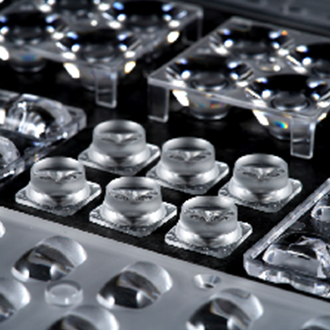
In today's competitive manufacturing landscape, speed and precision are not optional — they are baseline expectations. A well-structured plastic injection molding service plays a central role in helping manufacturers, product developers, and OEMs compress their production timelines without sacrificing part quality or dimensional accuracy. From the moment a design is finalized to the point where finished components leave the facility, every stage of the molding workflow carries timeline implications that experienced service providers are specifically equipped to manage.
Understanding how a plastic injection molding service actually shortens production cycles requires looking beyond the press cycle time itself. The real timeline gains come from upstream decisions — material selection, tooling design, process engineering, and quality validation — all of which a capable plastic injection molding service integrates into a coordinated production strategy. This article breaks down the specific mechanisms through which these services accelerate delivery while maintaining the consistency that industrial buyers depend on.
Front-End Engineering That Eliminates Downstream Delays
Design for Manufacturability Reviews
One of the most impactful ways a plastic injection molding service compresses timelines is by conducting thorough design for manufacturability (DFM) reviews before any tooling is cut. These reviews identify features in a part design that would cause mold filling problems, warpage, sink marks, or ejection difficulties — issues that, if discovered during production, can halt an entire run and require costly tool modifications.
A plastic injection molding service with strong engineering capabilities will flag wall thickness inconsistencies, undercuts that require side actions, and gate locations that could create weld lines in structurally critical areas. Resolving these issues at the design stage takes hours rather than the days or weeks that mid-production corrections typically consume. This front-loaded investment in engineering review is one of the clearest differentiators between service providers that consistently hit delivery windows and those that do not.
DFM reviews also allow the plastic injection molding service to recommend material substitutions that improve flow characteristics or reduce cycle time. A resin with better melt flow index may fill a complex cavity faster, reducing injection and cooling time per cycle — a compounding advantage across high-volume production runs.
Mold Flow Simulation and Process Pre-Validation
Modern plastic injection molding service providers use mold flow simulation software to virtually test how molten resin will behave inside a proposed tool design. This simulation predicts fill patterns, pressure distribution, cooling uniformity, and potential air trap locations before a single piece of steel is machined. The result is a tooling design that is far more likely to produce acceptable parts on the first trial run.
Without simulation, the traditional approach involves cutting a tool, running initial samples, identifying defects, modifying the tool, and repeating the cycle. Each iteration adds days or weeks to the timeline. A plastic injection molding service that integrates simulation into its standard workflow can often achieve first-article approval in a single tooling revision rather than three or four, which has a direct and measurable impact on time to production.
Tooling Strategy and Its Direct Effect on Lead Time
Tooling Material Selection Based on Volume and Timeline
The choice of tooling material is a strategic decision that a plastic injection molding service makes based on the buyer's volume requirements and timeline constraints. Aluminum tooling can be machined significantly faster than hardened steel and is well-suited for prototype runs, bridge production, or lower-volume programs where speed to first part is the priority. Steel tooling, while slower to produce, offers the durability needed for high-volume production and tighter dimensional tolerances over millions of cycles.
A plastic injection molding service that offers both tooling paths gives buyers the flexibility to begin production quickly with aluminum tooling while a production-grade steel tool is being built in parallel. This parallel tooling strategy is a proven method for compressing overall program timelines, particularly in product launches where market timing is critical.
In-House Tooling Versus Outsourced Tool Shops
A plastic injection molding service that maintains in-house tooling capabilities has a structural timeline advantage over one that outsources tool fabrication to third-party shops. When tooling is built internally, the molding team and the toolmakers share direct communication, which accelerates design iterations, reduces miscommunication errors, and allows for faster tool modifications when sampling reveals adjustments are needed.
Outsourced tooling introduces handoff delays, shipping time, and the risk that modifications are interpreted differently by a separate organization. For buyers with tight launch windows, selecting a plastic injection molding service with integrated tooling capability is a meaningful risk reduction strategy, not just a convenience preference.
Process Optimization During Production Runs
Scientific Molding Principles for Cycle Time Reduction
Scientific molding is a data-driven approach to process development that a high-capability plastic injection molding service applies to establish robust, repeatable molding parameters. Rather than relying on operator experience or trial-and-error adjustments, scientific molding uses systematic studies — including viscosity curves, gate seal studies, and cooling optimization — to define the exact process window that produces conforming parts consistently.
The timeline benefit of scientific molding is twofold. First, it reduces the number of rejected parts during production, which means less rework, less scrap, and fewer production interruptions. Second, it identifies the minimum cycle time that still produces parts within specification, which directly increases throughput. A plastic injection molding service that applies these principles can often reduce cycle times by ten to twenty percent compared to conventionally developed processes, a gain that compounds significantly across large production volumes.
Automation and Press Utilization Efficiency
Automation integration is another mechanism through which a plastic injection molding service accelerates production timelines. Robotic part removal, automated inspection systems, and integrated assembly or insert-loading operations reduce the manual labor content per cycle and eliminate the variability that human handling introduces. When a press can run lights-out or with minimal operator intervention, utilization rates increase and production schedules become more predictable.
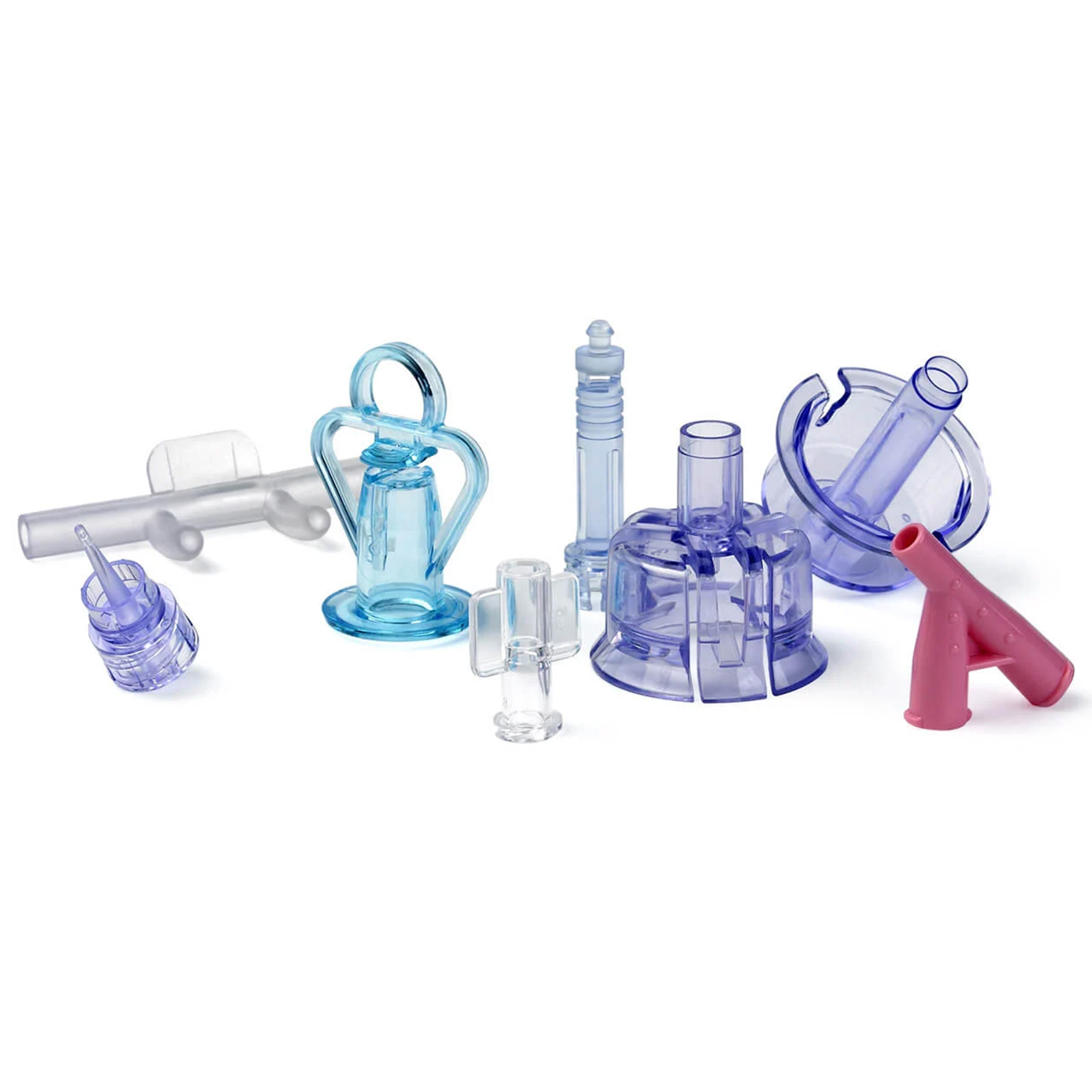
Press scheduling efficiency also matters. A plastic injection molding service with a diverse press fleet — ranging from small-tonnage machines for precision components to large-tonnage presses for structural parts — can match each job to the optimal machine rather than running parts on oversized or undersized equipment. Proper press matching reduces setup time, improves part quality, and keeps the production floor running at higher overall efficiency.
Quality Systems That Prevent Timeline Disruptions
First Article Inspection and PPAP Readiness
Quality failures are among the most damaging timeline disruptions in injection molding programs. A plastic injection molding service with rigorous first article inspection (FAI) protocols catches dimensional and cosmetic issues before full production begins, preventing the scenario where thousands of non-conforming parts must be scrapped or reworked after the fact. FAI processes that are well-documented and aligned with customer drawing requirements also accelerate customer approval, which is often a gating step before production release.
For buyers in regulated industries such as automotive, medical, or aerospace, Production Part Approval Process (PPAP) documentation is a mandatory requirement. A plastic injection molding service experienced in PPAP submission can prepare the required documentation — including process capability studies, measurement system analysis, and control plans — in parallel with tooling development, rather than treating it as a post-production activity. This parallel documentation approach can shave weeks off the overall program timeline.
Statistical Process Control During High-Volume Runs
Maintaining quality during high-volume production is as important as achieving it at first article. A plastic injection molding service that uses statistical process control (SPC) monitors critical dimensions and process parameters in real time, allowing operators to detect process drift before it produces out-of-specification parts. Early detection means corrective action is taken on a small number of parts rather than an entire production lot.
SPC data also provides the plastic injection molding service with a continuous improvement feedback loop. Trends identified across multiple production runs inform tooling maintenance schedules, material lot qualification, and process parameter adjustments that keep the process centered and capable over time. This sustained process stability is what allows a plastic injection molding service to commit to and consistently meet delivery schedules across long-term supply agreements.
Supply Chain Integration and Scheduling Coordination
Material Procurement and Inventory Management
A plastic injection molding service that manages material procurement as part of its service offering removes a significant source of timeline risk from the buyer's responsibility. Resin availability, lead times from material distributors, and lot-to-lot consistency all affect production scheduling. When the molding service maintains safety stock of commonly used resins or has established supplier relationships that support expedited delivery, material shortages are far less likely to delay production starts.
Material qualification is another area where a proactive plastic injection molding service adds timeline value. Pre-qualifying alternative resin sources for critical materials means that if a primary supplier experiences a shortage, production can continue with a validated substitute rather than waiting for the original material to become available. This supply chain resilience is particularly valuable in periods of raw material volatility.
Production Scheduling Transparency and Communication
Clear, proactive communication between a plastic injection molding service and its customers is a practical timeline management tool. When buyers have visibility into press scheduling, tooling status, and material availability, they can make informed decisions about their own downstream operations — assembly scheduling, inventory positioning, and customer commitments. Surprises are the enemy of efficient production planning.
A plastic injection molding service that provides regular production updates, flags potential delays early, and collaborates on schedule adjustments when disruptions occur gives buyers the information they need to manage their supply chains effectively. This transparency is not just a customer service attribute — it is a functional component of timeline optimization that reduces the cost and disruption of last-minute schedule changes.
FAQ
How early in a product development program should a plastic injection molding service be engaged?
Engaging a plastic injection molding service during the design phase — before drawings are finalized — yields the greatest timeline benefits. Early involvement allows the service provider to conduct DFM reviews, recommend design changes that improve moldability, and begin tooling planning in parallel with design completion. Waiting until a design is fully released before contacting a molding service is one of the most common causes of avoidable timeline delays in new product introductions.
What is the typical lead time for tooling in a plastic injection molding service?
Tooling lead times vary based on tool complexity, material, and the service provider's capacity. Simple single-cavity aluminum tools can be completed in two to four weeks, while complex multi-cavity hardened steel tools may require eight to sixteen weeks or more. A plastic injection molding service with in-house tooling capabilities and strong project management can often compress these timelines compared to industry averages, particularly for programs with defined urgency.
Can a plastic injection molding service support both prototype and production volumes on the same program?
Yes. Many plastic injection molding service providers offer bridge tooling strategies that use prototype-grade tooling to produce functional parts for testing and early market introduction while production tooling is being built. This approach allows programs to move forward on multiple fronts simultaneously, reducing the total elapsed time from design approval to full-rate production. It is a particularly effective strategy for product launches with fixed market windows.
How does a plastic injection molding service handle design changes after tooling has been started?
Design changes after tooling has begun are a common reality in product development. A plastic injection molding service manages these changes through a formal engineering change process that evaluates the impact on tooling, timeline, and cost before any modifications are made. Providers with in-house tooling can typically implement changes faster than those relying on external tool shops. Minimizing changes after tool release is always preferable, which is why thorough DFM review at the outset is such a high-value investment.
Table of Contents
- Front-End Engineering That Eliminates Downstream Delays
- Tooling Strategy and Its Direct Effect on Lead Time
- Process Optimization During Production Runs
- Quality Systems That Prevent Timeline Disruptions
- Supply Chain Integration and Scheduling Coordination
-
FAQ
- How early in a product development program should a plastic injection molding service be engaged?
- What is the typical lead time for tooling in a plastic injection molding service?
- Can a plastic injection molding service support both prototype and production volumes on the same program?
- How does a plastic injection molding service handle design changes after tooling has been started?
