
 EN
EN
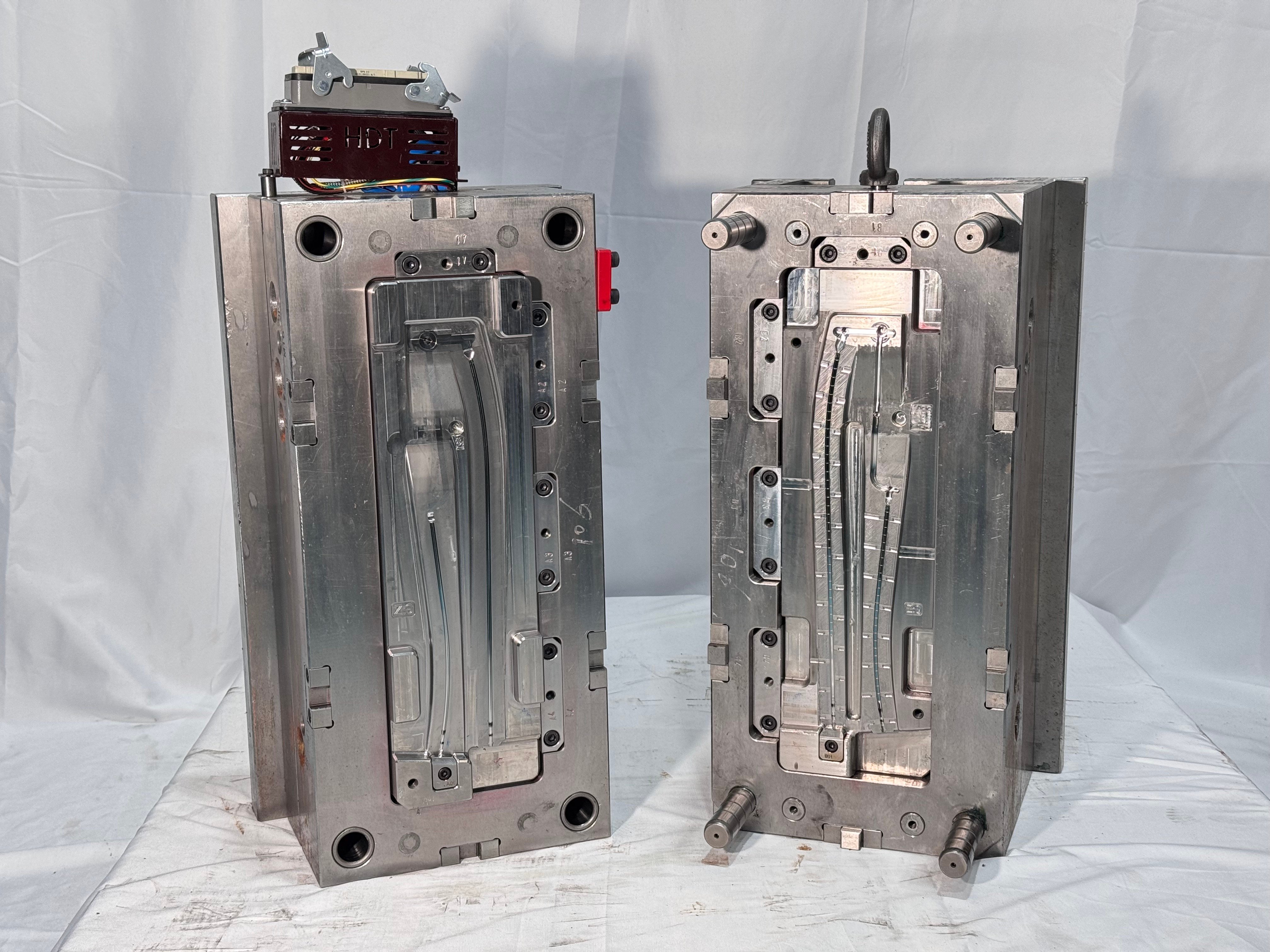
Custom plastic injection molding has become the cornerstone of modern manufacturing across diverse industries, from automotive and medical devices to consumer electronics and industrial equipment. Understanding the key advantages of this versatile manufacturing process helps businesses make informed decisions about production methods, cost optimization, and product quality. This comprehensive exploration reveals why custom plastic injection molding continues to dominate as the preferred choice for creating complex plastic components at scale, offering unique benefits that alternative manufacturing methods cannot easily replicate.
The advantages of custom plastic injection molding extend far beyond simple part production, encompassing economic efficiency, design flexibility, material versatility, and quality consistency that directly impact manufacturing competitiveness. Whether producing tens of thousands of identical components or creating intricate geometries with tight tolerances, custom plastic injection molding delivers tangible benefits that translate into reduced costs, faster time-to-market, and enhanced product performance. This article examines the specific advantages that make custom plastic injection molding an indispensable manufacturing solution for businesses seeking reliable, scalable, and cost-effective production capabilities.
Superior Production Efficiency and Cost Effectiveness
High-Volume Manufacturing Economics
One of the most compelling advantages of custom plastic injection molding lies in its exceptional cost efficiency for high-volume production runs. Once the initial tooling investment is made, the per-unit cost decreases dramatically as production volume increases. This economy of scale makes custom plastic injection molding the ideal choice for manufacturers requiring thousands or millions of identical parts. The automated nature of the process minimizes labor costs while maximizing output, with modern injection molding machines capable of producing parts in cycle times ranging from seconds to a few minutes depending on part complexity and size.
The rapid cycle times characteristic of custom plastic injection molding translate directly into production capacity that few other manufacturing methods can match. A single mold can produce hundreds of thousands of parts before requiring maintenance or replacement, distributing the initial tooling cost across a large production run. This financial model proves particularly advantageous for businesses with predictable demand patterns, as the upfront investment in quality molds yields substantial returns through reduced manufacturing costs over the product lifecycle. The ability to run production continuously with minimal human intervention further enhances the economic benefits.
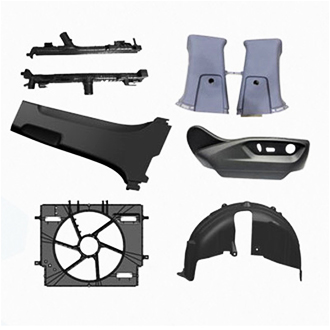
Material waste reduction represents another significant economic advantage of custom plastic injection molding. The process operates with exceptional material efficiency, as runners, sprues, and rejected parts can typically be reground and reused in subsequent production cycles. This closed-loop material usage minimizes waste disposal costs and reduces raw material expenses, contributing to both environmental sustainability and improved profit margins. Compared to subtractive manufacturing methods that remove material to create final shapes, injection molding adds material only where needed, inherently reducing waste from the production process itself.
Automation Integration and Labor Efficiency
The automation capabilities inherent in custom plastic injection molding provide substantial labor cost advantages while improving production consistency. Modern injection molding operations integrate robotic systems for part removal, quality inspection, secondary operations, and packaging, creating highly efficient production cells that operate with minimal human intervention. This automation reduces labor costs per unit while simultaneously eliminating human error that can compromise quality or create production delays. The ability to run lights-out manufacturing operations during off-shifts maximizes equipment utilization and production throughput.
Skilled operators can monitor multiple injection molding machines simultaneously, further distributing labor costs across greater production volume. Advanced process monitoring systems alert operators to potential issues before they result in defective parts, enabling preventive intervention that maintains production flow and quality standards. This combination of automation and intelligent monitoring creates a manufacturing environment where labor resources focus on optimization and problem-solving rather than repetitive manual tasks, improving both productivity and workplace satisfaction.
Exceptional Design Flexibility and Complexity Management
Complex Geometry Capabilities
Custom plastic injection molding excels at producing components with intricate geometries that would be difficult, expensive, or impossible to create using alternative manufacturing methods. The process accommodates complex internal features, undercuts, threads, textured surfaces, and multi-level details within a single molded part, eliminating the need for secondary assembly operations. This design freedom enables engineers to optimize part functionality by integrating multiple features into unified components, reducing assembly time, part count, and potential failure points in finished products.
The ability to create thin-walled sections with consistent thickness throughout the part represents a significant advantage of custom plastic injection molding. Thin walls reduce material usage and part weight while maintaining structural integrity, particularly important in industries like automotive and aerospace where weight reduction directly impacts performance and fuel efficiency. Advanced mold design techniques, including gas-assisted injection and thin-wall molding technologies, push the boundaries of what's achievable in terms of wall thickness ratios and overall part complexity.
Multi-cavity molds further enhance the design flexibility advantages by enabling production of multiple different parts simultaneously or creating multiple identical parts in a single cycle. Family molds allow manufacturers to produce complete component sets in coordinated production runs, ensuring consistent material properties and color matching across related parts. This capability streamlines inventory management and assembly operations while maintaining the cost efficiency benefits of high-volume production.
Rapid Design Iteration and Prototyping
Modern custom plastic injection molding workflows integrate rapid prototyping technologies that accelerate product development cycles significantly. Manufacturers can create prototype molds using aluminum or other softer tool materials that allow faster machining and lower initial costs compared to production-grade steel molds. These prototype tools enable design validation, functional testing, and market evaluation before committing to expensive production tooling, reducing financial risk and ensuring the final design meets all performance requirements.
Design modifications can be implemented efficiently in custom plastic injection molding through strategic mold alterations. Adding material to a mold cavity proves straightforward through welding and refinishing operations, while removing material requires more careful planning but remains feasible. This modification capability allows continuous improvement throughout the product lifecycle as customer feedback, performance data, and cost optimization opportunities emerge. The ability to refine designs while maintaining production continuity provides competitive advantages in dynamic markets where product evolution drives customer satisfaction.
Material Versatility and Performance Optimization
Extensive Material Selection
The vast array of thermoplastic materials compatible with custom plastic injection molding enables precise matching of material properties to application requirements. From commodity resins like polypropylene and polyethylene to engineering-grade materials such as polycarbonate, nylon, and acetal, manufacturers can select materials based on mechanical strength, chemical resistance, thermal stability, electrical properties, and environmental exposure considerations. This material diversity ensures optimal performance characteristics for each specific application while maintaining the cost efficiency and production advantages of the injection molding process.
Specialty materials expand the capabilities of custom plastic injection molding into demanding applications requiring exceptional performance characteristics. Glass-filled resins provide enhanced strength and dimensional stability, carbon fiber reinforcements offer superior strength-to-weight ratios, and flame-retardant compounds meet stringent safety regulations in electronics and construction applications. Medical-grade materials certified for biocompatibility enable production of components for healthcare devices and pharmaceutical applications, while food-grade resins ensure safety in packaging and food processing equipment.
Material blending and additive incorporation during custom plastic injection molding create customized performance profiles tailored to specific requirements. Colorants can be added directly to the base resin, eliminating secondary painting or coating operations while ensuring consistent color throughout the part. UV stabilizers extend outdoor service life, lubricants reduce friction in moving assemblies, and antimicrobial additives provide hygiene benefits in medical and consumer applications. This formulation flexibility allows manufacturers to optimize multiple performance parameters simultaneously within a single production process.
Multi-Material and Overmolding Capabilities
Advanced custom plastic injection molding techniques like two-shot molding and overmolding enable creation of complex multi-material components within a single production cycle. These processes combine different materials with complementary properties, such as rigid structural substrates with soft-touch elastomeric surfaces, creating ergonomic grips, sealed assemblies, and vibration-damping components. The molecular bonding achieved between materials during the molding process creates durable interfaces that resist delamination and provide superior performance compared to mechanically assembled multi-material components.
Insert molding represents another valuable capability within custom plastic injection molding, allowing integration of metal components, electronic elements, or other pre-positioned inserts directly into molded plastic parts. This technique creates hybrid components that leverage the strength and conductivity of metal inserts with the design flexibility and corrosion resistance of plastic encapsulation. Applications range from threaded metal inserts for assembly operations to completely encapsulated electronic circuits in sealed housings, demonstrating the versatility of custom plastic injection molding in creating integrated multi-functional components.
Consistent Quality and Precision Manufacturing
Dimensional Accuracy and Repeatability
The precision inherent in custom plastic injection molding delivers exceptional dimensional consistency across production runs, with tight tolerances achievable through proper mold design and process control. Modern injection molding machines equipped with closed-loop controls maintain consistent pressure, temperature, and timing parameters that ensure every part replicates the mold cavity dimensions with minimal variation. This repeatability proves essential in applications requiring assembly of multiple components with precise fit requirements or in industries with stringent quality standards like automotive and medical device manufacturing.
Statistical process control integrated into custom plastic injection molding operations enables real-time monitoring of critical dimensions and quality parameters throughout production runs. Automated inspection systems measure key features on sampled parts, comparing results against specification limits and alerting operators to trending variations before they exceed acceptable tolerances. This proactive quality management approach minimizes scrap generation and ensures consistent product quality that meets or exceeds customer expectations, building reputation and reducing warranty costs.
The thermal stability and wear resistance of properly maintained injection molds contribute to long-term dimensional consistency even across millions of production cycles. Hardened steel molds resist erosion from abrasive filled materials and maintain cavity dimensions despite repeated thermal cycling. Regular preventive maintenance, including cleaning, lubrication, and inspection of wear-prone areas, extends mold life while preserving the dimensional accuracy essential for quality production. This durability translates into predictable tooling costs and uninterrupted production schedules over extended product lifecycles.
Surface Finish and Aesthetic Quality
Custom plastic injection molding produces parts with superior surface finish quality directly from the mold, often eliminating the need for secondary finishing operations. Mold surfaces can be polished to mirror finishes, textured to replicate leather or other natural materials, or treated with specialized coatings that create unique visual and tactile effects. This as-molded surface quality reduces production costs by eliminating painting, plating, or other finishing steps while ensuring consistent appearance across all produced parts. The ability to achieve desired aesthetics during the primary manufacturing process streamlines production and improves overall efficiency.
Color consistency represents another quality advantage of custom plastic injection molding, particularly when using pre-colored resins or masterbatch systems that ensure uniform pigment distribution throughout each part. Unlike surface coating methods that can chip or wear away, integral color extends through the entire part thickness, maintaining appearance even if the surface becomes scratched or abraded during use. This durability proves particularly valuable in consumer products and outdoor applications where appearance retention directly impacts perceived quality and customer satisfaction.
Environmental Sustainability and Resource Efficiency
Material Recycling and Waste Minimization
The environmental advantages of custom plastic injection molding include efficient material utilization and extensive recycling opportunities that reduce overall environmental impact. Thermoplastic materials used in injection molding can be reground and reprocessed multiple times without significant degradation of properties, allowing manufacturers to recycle production scrap, runners, and rejected parts back into the production stream. This closed-loop material management minimizes landfill waste while reducing raw material costs, creating both environmental and economic benefits that align with corporate sustainability goals.
Energy efficiency in modern custom plastic injection molding operations has improved substantially through technological advances in machine design and process optimization. All-electric injection molding machines eliminate hydraulic systems, reducing energy consumption while improving precision and cleanliness. Servo-driven hydraulic machines provide intermediate efficiency improvements over conventional hydraulic systems. Optimized heating and cooling systems minimize energy waste during mold temperature control, while insulated barrel covers reduce heat loss and stabilize processing temperatures with lower energy input.
Lightweighting capabilities enabled by custom plastic injection molding contribute to sustainability throughout product lifecycles, particularly in transportation applications where reduced component weight translates directly into fuel savings and emissions reductions. The ability to create complex, thin-walled structures that maintain required strength while minimizing material usage demonstrates how injection molding supports broader environmental objectives. When compared to alternative materials like metal, plastic components often require less energy for production and offer comparable or superior performance in many applications, contributing to overall resource conservation.
Product Durability and Lifecycle Extension
The durability of properly designed injection molded components extends product service life, reducing replacement frequency and the environmental burden associated with manufacturing and disposing of short-lived products. Custom plastic injection molding enables creation of parts with excellent resistance to chemicals, moisture, UV exposure, and mechanical stress, ensuring reliable performance in demanding environments. This longevity reduces the total environmental impact per unit of service delivered, as fewer replacement parts need to be manufactured, transported, and eventually disposed of over the product's functional lifetime.
Design for disassembly principles can be readily implemented in custom plastic injection molding, creating products that facilitate component separation and material recovery at end of life. Snap-fit assemblies molded directly into components eliminate fasteners and simplify disassembly for recycling or refurbishment. Material identification codes can be molded into parts to facilitate sorting during recycling operations. These design considerations, easily accommodated within the injection molding process, support circular economy principles and enhance the overall sustainability profile of manufactured products.
FAQ
How does custom plastic injection molding compare to 3D printing for production volumes?
Custom plastic injection molding significantly outperforms 3D printing for medium to high production volumes due to dramatically faster cycle times and lower per-unit costs. While 3D printing excels for prototyping and very low-volume production without tooling investment, injection molding becomes more economical typically above 500-1000 units depending on part complexity. Injection molding also delivers superior mechanical properties, surface finish, and dimensional consistency compared to most 3D printing technologies. For production volumes exceeding several thousand parts, custom plastic injection molding provides unmatched efficiency and cost effectiveness.
What minimum order quantities typically justify custom plastic injection molding?
The economic viability of custom plastic injection molding depends on balancing tooling investment against per-unit production costs and alternative manufacturing methods. Generally, production runs exceeding 1000-5000 units begin justifying custom tooling investment, though this threshold varies based on part complexity, size, and material requirements. For simpler parts with lower tooling costs, smaller quantities may prove economical, while complex multi-cavity molds require higher volumes to achieve cost effectiveness. Many manufacturers offer prototype tooling options with lower upfront costs suitable for validating designs before committing to production-grade molds for larger quantities.
Can custom plastic injection molding accommodate design changes after tooling is complete?
Design modifications remain possible after mold fabrication, though the ease and cost of changes depend on whether modifications require adding or removing material from the mold cavity. Adding plastic material to the final part by removing steel from the mold proves relatively straightforward through additional machining or EDM processes. Reducing plastic material requires adding steel to the mold through welding and refinishing, which involves more complexity and cost. Strategic mold design can anticipate potential modifications by incorporating adjustable inserts or features that facilitate future changes. Early design validation through prototype tooling minimizes the need for costly modifications to production molds.
What surface finish options are available with custom plastic injection molding?
Custom plastic injection molding offers extensive surface finish possibilities ranging from high-gloss polished surfaces to intricate textures replicating leather, wood grain, geometric patterns, or custom designs. Mold surfaces can be polished to SPI finish standards from rough to mirror finish, machined to specific textures, chemically etched for matte appearances, or laser engraved with fine details. Multiple finish types can coexist on different surfaces of the same part through selective mold treatment. These as-molded finishes eliminate secondary operations while ensuring consistent appearance across production runs, with the chosen finish replicated precisely on every molded part throughout the mold's service life.
Table of Contents
- Superior Production Efficiency and Cost Effectiveness
- Exceptional Design Flexibility and Complexity Management
- Material Versatility and Performance Optimization
- Consistent Quality and Precision Manufacturing
- Environmental Sustainability and Resource Efficiency
-
FAQ
- How does custom plastic injection molding compare to 3D printing for production volumes?
- What minimum order quantities typically justify custom plastic injection molding?
- Can custom plastic injection molding accommodate design changes after tooling is complete?
- What surface finish options are available with custom plastic injection molding?
