Professional Insert Molding Services - Advanced Plastic Metal Integration Solutions

application/insert-molding-services, application/insert-molding-services, 
Get a Quote
Get a Quote

insert molding services

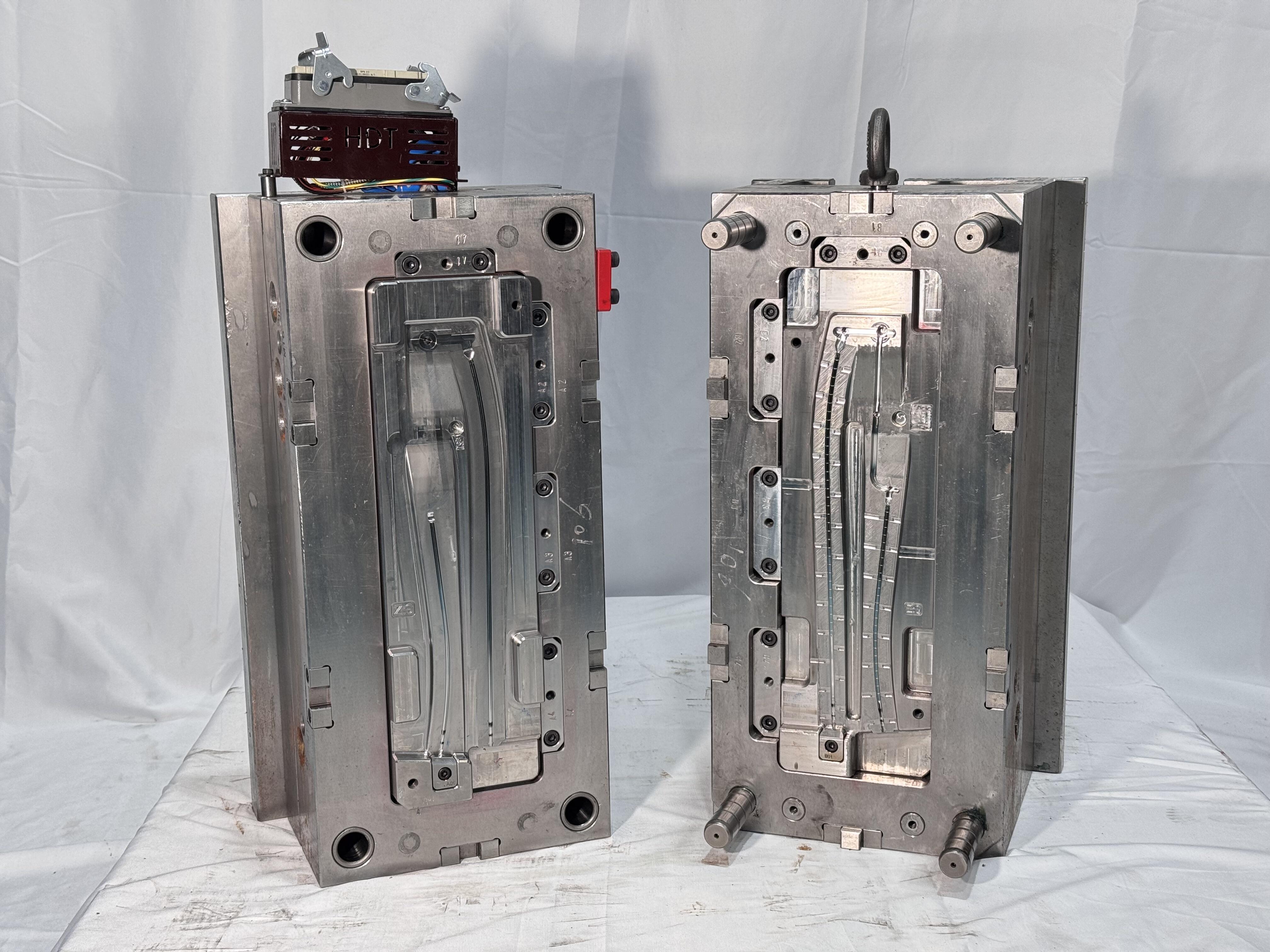
Insert molding services represent an advanced manufacturing process that combines metal components or other materials with plastic during injection molding to create unified, integrated parts. This sophisticated technique involves placing pre-formed inserts into a mold cavity before injecting molten plastic around them, resulting in a single cohesive component. The main function of insert molding services is to permanently encapsulate metal threaded fasteners, electrical contacts, structural reinforcements, or decorative elements within plastic housings, eliminating the need for secondary assembly operations. Technological features of insert molding services include precision positioning systems that hold inserts firmly during the molding cycle, specialized mold designs with cavities that accommodate various insert geometries, and controlled injection parameters that ensure proper plastic flow around complex insert shapes without displacement. Advanced insert molding services utilize robotic insert placement for consistent positioning accuracy, multi-cavity tooling for high-volume production efficiency, and sophisticated temperature controls that prevent thermal damage to sensitive insert materials. The process accommodates diverse insert materials including brass, stainless steel, copper alloys, aluminum, and even pre-molded plastic components, offering tremendous design flexibility. Applications of insert molding services span numerous industries and product categories. In electronics manufacturing, this process creates connectors, switches, and circuit board mountings with embedded metal contacts. Automotive applications include sensor housings with integrated terminals, control knobs with metal shafts, and structural components with reinforced metal cores. Medical device manufacturers rely on insert molding services to produce surgical instrument handles with stainless steel implements, diagnostic equipment housings with embedded sensors, and drug delivery systems with precision metal needles. Consumer products benefit from insert molding services through durable tool handles with captured metal components, appliance controls with embedded electronics, and sporting goods with structural metal reinforcements. The versatility of insert molding services enables manufacturers to reduce assembly time, improve product reliability, enhance structural integrity, and achieve design aesthetics that would be impossible with conventional assembly methods.

New Products

Insert molding services deliver substantial practical benefits that directly impact your bottom line and product quality. First, this manufacturing approach dramatically reduces production costs by eliminating separate assembly steps. When you integrate metal components directly during molding, you remove the labor expenses associated with manual insertion, ultrasonic welding, press-fitting, or adhesive bonding. Your production timeline shortens considerably because you receive finished parts rather than components requiring additional work. Second, insert molding services enhance product reliability and durability significantly. The molecular bond created between molten plastic and insert surfaces creates a permanent connection far superior to mechanical fastening or adhesive joining. Your products resist vibration loosening, environmental degradation, and stress failures that compromise assembled alternatives. This reliability translates to fewer warranty claims and higher customer satisfaction. Third, design flexibility expands tremendously with insert molding services. You can create complex geometries impossible with traditional assembly, position components with extreme precision, and achieve tight tolerances consistently. Your engineering team gains freedom to optimize designs for functionality rather than assembly constraints. Fourth, insert molding services improve product aesthetics by hiding fasteners, eliminating visible seams, and creating smooth finished surfaces. Your products present a professional appearance that strengthens brand perception and commands premium pricing. Fifth, weight reduction becomes achievable as insert molding services allow strategic material placement. You use metal only where structural strength is essential and lightweight plastic elsewhere, reducing shipping costs and improving user ergonomics. Sixth, insert molding services protect sensitive components from environmental exposure. The plastic encapsulation shields metal inserts from corrosion, moisture, chemicals, and physical damage, extending product lifespan significantly. Seventh, you achieve improved electrical performance through precise positioning of conductive inserts, consistent dielectric spacing, and contamination-free connections. Eighth, inventory management simplifies dramatically. Instead of tracking multiple components, fasteners, and assemblies, you manage single finished parts, reducing storage requirements and minimizing handling errors. Ninth, quality consistency improves as automated insert molding services eliminate human variability in assembly operations. Every part emerges with identical insert positioning, bond strength, and dimensional accuracy. Finally, insert molding services support sustainability initiatives by reducing material waste, eliminating disposable fasteners, and creating products with longer service lives. These combined advantages make insert molding services an intelligent manufacturing choice for companies seeking competitive advantages through superior products and operational efficiency.

Tips And Tricks

What are the key advantages of custom plastic injection molding services?

29

Apr

What are the key advantages of custom plastic injection molding services?

Custom plastic injection molding has become the cornerstone of modern manufacturing across diverse industries, from automotive and medical devices to consumer electronics and industrial equipment. Understanding the key advantages of this versatile ma...
View More
What industries benefit most from professional injection molding companies?

08

May

What industries benefit most from professional injection molding companies?

Manufacturing precision parts at scale requires specialized capabilities that only experienced injection molding companies can deliver. Across global industries, businesses rely on these partnerships to transform raw polymer materials into complex co...
View More
Why do manufacturers rely on plastic moulding for scalable production?

27

May

Why do manufacturers rely on plastic moulding for scalable production?

Manufacturers across industries face a persistent challenge: how to scale production efficiently while maintaining product quality, controlling costs, and meeting rapidly changing market demands. The answer increasingly lies in plastic moulding, a ma...
View More
How does plastic injection molding service optimize production timelines?

27

May

How does plastic injection molding service optimize production timelines?

In today's competitive manufacturing landscape, speed and precision are not optional — they are baseline expectations. A well-structured plastic injection molding service plays a central role in helping manufacturers, product developers, and OE...
View More

Get a Free Quote

Our representative will contact you soon.
0/1000
Superior Structural Integration and Mechanical Performance

Superior Structural Integration and Mechanical Performance

Insert molding services provide exceptional structural integration that fundamentally transforms product performance and longevity compared to conventional assembly methods. When metal components are positioned within the mold cavity and thermoplastic material flows around them under controlled pressure and temperature, a molecular-level bond forms between the materials. This integration creates a unified structure where stress distribution occurs naturally across both materials rather than concentrating at connection points as happens with screws, rivets, or adhesives. The result is a component that withstands higher mechanical loads, more extreme vibration environments, and greater impact forces without failure. For manufacturers, this superior structural integration means designing products with confidence in their performance under real-world conditions. Consider automotive applications where sensor housings must endure constant engine vibration, temperature cycling from extreme cold to underhood heat, and occasional impact from road debris. Insert molding services create housings where embedded metal terminals remain precisely positioned and electrically connected despite these harsh conditions. The plastic encapsulation distributes stresses that would otherwise fatigue soldered connections or loosen pressed terminals. In power tool manufacturing, insert molding services enable handles that securely retain metal drive shafts, gear housings, and motor mounts even under the rotational forces and vibrations generated during operation. The metal inserts cannot work loose or rotate within the plastic because the molding process creates mechanical interlocking through the insert surface features combined with the molecular adhesion between materials. Medical device manufacturers particularly value this structural integration for surgical instruments where reliability is literally life-critical. A scalpel handle produced through insert molding services maintains blade alignment permanently, unlike assembled alternatives where repeated sterilization cycles can degrade adhesives or loosen mechanical fasteners. The structural advantages extend to miniature components where traditional assembly becomes impractical. Micro-electronics housings with embedded contact pins, wearable device components with integrated sensors, and precision optical assemblies all benefit from the positioning accuracy and permanent retention that insert molding services provide. Product designers gain freedom to specify higher performance requirements knowing the manufacturing process will deliver consistent structural integrity across production volumes ranging from prototypes to millions of units.
Streamlined Production Efficiency and Cost Optimization

Streamlined Production Efficiency and Cost Optimization

Insert molding services revolutionize manufacturing efficiency by consolidating multiple production steps into a single automated operation, delivering measurable cost reductions and faster time-to-market for your products. Traditional manufacturing approaches require separate processes for component fabrication, insert preparation, assembly operations, quality inspection at multiple stages, and often additional finishing steps. Each transition between processes introduces handling time, labor costs, and opportunities for defects or errors. Insert molding services eliminate this complexity by delivering finished parts directly from the molding machine. The efficiency gains begin with reduced labor requirements. Automated systems position inserts into mold cavities with robotic precision, eliminating manual placement that consumes worker time and introduces positioning variability. The molding cycle completes in seconds to minutes depending on part size, then ejects a finished component requiring no additional assembly. Your workforce focuses on value-adding activities rather than repetitive assembly tasks, and you avoid the costs of hiring, training, and managing assembly personnel. Equipment investment decreases as well, since you eliminate ultrasonic welders, press-fit stations, adhesive dispensing equipment, and curing ovens from your production floor. Insert molding services also accelerate production schedules significantly. When you remove assembly steps, you remove queue time between operations, work-in-process inventory, and coordination complexity. Parts flow directly from molding to packaging, shortening lead times and improving delivery predictability. This speed advantage proves particularly valuable when responding to market opportunities or customer demands that require rapid production scaling. Quality costs decrease substantially with insert molding services because the automated process produces consistent results that reduce inspection requirements and virtually eliminate assembly errors. You avoid costs associated with missing fasteners, misaligned components, inadequate adhesive coverage, or incorrect torque specifications that plague manual assembly. Scrap rates drop because positioning accuracy ensures inserts sit correctly before plastic injection, and process monitoring detects problems before producing defective parts. Material efficiency improves as insert molding services use precisely the plastic quantity needed without excess adhesive, disposable fasteners, or packaging for sub-components. Supply chain management simplifies when you source finished molded assemblies rather than coordinating delivery of multiple components, fasteners, and assembly supplies. Vendors consolidate, purchase orders reduce, and receiving inspection streamlines, lowering administrative overhead throughout your organization.

Enhanced Design Freedom and Product Differentiation

Enhanced Design Freedom and Product Differentiation

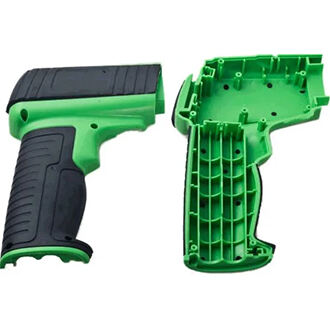
Insert molding services unlock unprecedented design possibilities that enable product differentiation, functional innovation, and aesthetic excellence impossible through conventional manufacturing approaches. Design engineers face constant pressure to create products that perform better, weigh less, cost less to produce, and look more appealing than competitive offerings. Insert molding services address all these objectives simultaneously by removing constraints inherent in assembled products. The design freedom begins with geometric complexity. Because plastic flows around inserts during molding, you can position metal components at angles, orientations, and locations inaccessible to assembly tools. Imagine electrical connectors where contact pins emerge at compound angles optimized for circuit board mating rather than constrained by straight-line insertion requirements. Or consider structural brackets where metal reinforcements follow stress paths through organic curves rather than simple linear patterns dictated by fastener access. Insert molding services make these optimized designs manufacturable. Material optimization becomes possible as designers specify metal inserts only where their superior strength, conductivity, or wear resistance provides essential value, while using lightweight, cost-effective plastic for all other features. This strategic material placement reduces product weight significantly compared to all-metal alternatives while maintaining necessary performance. Aerospace and automotive applications particularly benefit from weight optimization that improves fuel efficiency and reduces emissions. Aesthetic differentiation strengthens brand identity and justifies premium pricing in competitive markets. Insert molding services create seamless surfaces without visible fasteners, gaps, or assembly evidence. The plastic can encapsulate decorative metal inserts partially, revealing polished surfaces in deliberate patterns that communicate quality and attention to detail. Soft-touch overmolding combines with insert molding services to add ergonomic grip surfaces directly onto products with embedded metal components, delivering comfort and functionality in a single manufacturing step. Functional integration reaches new levels as insert molding services enable embedding multiple insert types within single components. Electronic assemblies combine conductive terminals, grounding clips, shielding elements, and structural mounts all captured during one molding operation. This integration reduces the total part count dramatically, simplifying product architecture, improving reliability by eliminating connection interfaces, and accelerating assembly of higher-level systems. Miniaturization advances as insert molding services position tiny components with precision measured in hundredths of millimeters, enabling compact product designs that meet consumer demands for portable, lightweight devices without sacrificing capability or durability.