Precision Mold Design Solutions: Advanced Manufacturing Technology for Superior Product Quality

application/precision-mold-design, application/precision-mold-design, 
Get a Quote
Get a Quote

precision mold design

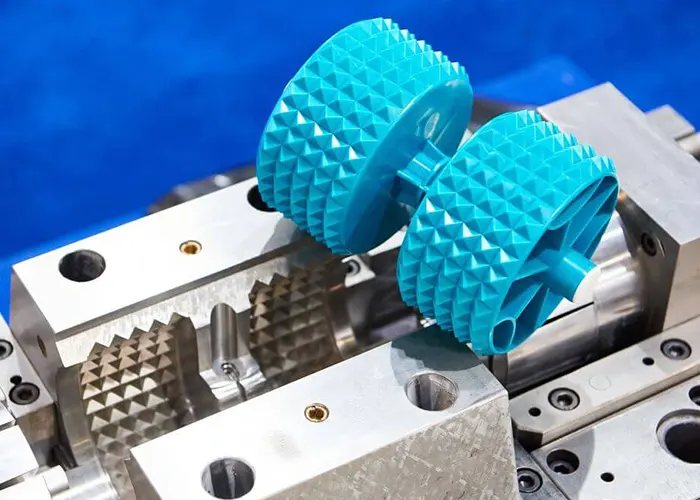
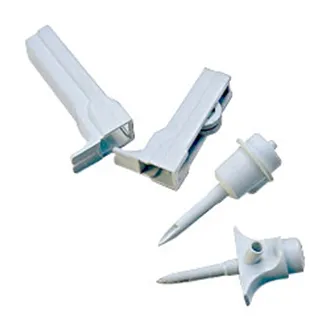
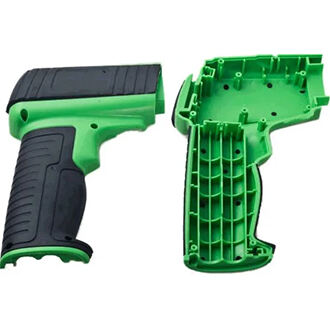
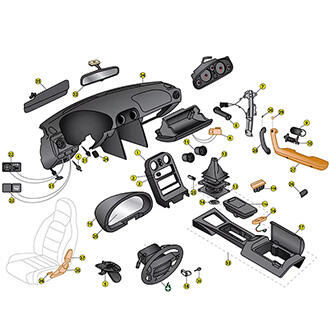
Precision mold design represents a critical engineering discipline that combines advanced technology with meticulous planning to create manufacturing tools capable of producing components with exceptional accuracy and consistency. This specialized field focuses on developing molds that can repeatedly fabricate parts with tolerances measured in microns, ensuring that every product meets stringent quality standards. The main functions of precision mold design encompass the creation of detailed blueprints, selection of appropriate materials, and implementation of cooling systems that maintain optimal temperature control throughout the production cycle. Engineers working in precision mold design utilize sophisticated computer-aided design software to model every aspect of the mold structure, from the cavity geometry to the ejection mechanisms. These professionals must consider multiple factors including material flow patterns, shrinkage rates, pressure distribution, and thermal management to ensure the final mold performs flawlessly in production environments. The technological features of precision mold design include multi-axis machining capabilities, electrical discharge machining for intricate details, and surface finishing techniques that achieve mirror-like polishes. Modern precision mold design incorporates simulation software that predicts how molten materials will behave during injection, allowing designers to optimize gate locations and runner systems before physical production begins. Applications for precision mold design span numerous industries including automotive manufacturing, medical device production, consumer electronics, aerospace components, and packaging solutions. In the automotive sector, precision mold design enables the creation of complex interior trim pieces, exterior body panels, and under-hood components that must withstand extreme temperatures and mechanical stress. Medical device manufacturers rely on precision mold design to produce sterile, biocompatible components such as syringes, surgical instruments, and diagnostic equipment housings. The electronics industry depends on precision mold design for creating intricate connector housings, smartphone cases, and computer peripheral components that require exact dimensional stability. Through careful attention to detail and implementation of cutting-edge technologies, precision mold design continues to push the boundaries of what is possible in mass manufacturing, delivering products that combine aesthetic appeal with functional excellence.

New Products

The advantages of precision mold design deliver tangible benefits that directly impact your bottom line and competitive position in the marketplace. First and foremost, precision mold design dramatically reduces production waste by ensuring that components are manufactured correctly the first time, eliminating costly rejects and rework that drain resources and delay delivery schedules. When your molds are designed with precision, you experience fewer production interruptions, which means your manufacturing lines run smoothly and efficiently without unexpected downtime for repairs or adjustments. This reliability translates into predictable production schedules that help you meet customer commitments and maintain strong business relationships. Another significant advantage comes from the extended lifespan of precision-designed molds, which are engineered to withstand hundreds of thousands or even millions of cycles before requiring maintenance. This durability means you spend less money on replacement tooling and enjoy lower total cost of ownership over the life of your manufacturing operation. Precision mold design also enables you to achieve tighter tolerances in your finished products, which opens doors to new market opportunities in industries that demand exacting standards. Your products will fit together better, function more reliably, and deliver superior performance compared to competitors using conventional mold designs. The improved surface finish quality that results from precision mold design reduces or eliminates secondary finishing operations, saving you labor costs and accelerating time to market. You will also benefit from enhanced material efficiency, as precision mold design optimizes the flow of raw materials and minimizes excess material trapped in runners and gates. This efficiency reduces your raw material costs per part and supports sustainability initiatives by decreasing waste generation. Additionally, precision mold design facilitates faster cycle times through optimized cooling channel layouts that extract heat more effectively, allowing you to produce more parts per hour and increase overall throughput. The versatility of precision mold design accommodates a wide range of materials, from standard thermoplastics to advanced engineering resins and composites, giving you flexibility to respond to changing market demands. You will find that precision mold design simplifies quality control procedures because parts produced from well-designed molds exhibit consistent dimensions and properties, reducing inspection time and associated costs. The documentation and traceability built into precision mold design processes provide confidence during audits and support continuous improvement initiatives. Ultimately, investing in precision mold design positions your organization as a quality leader, attracting customers who value reliability and performance while building a reputation for excellence that drives long-term business growth.

Tips And Tricks

What makes custom injection molding a cost-effective production solution?

29

Apr

What makes custom injection molding a cost-effective production solution?

Manufacturing decision-makers constantly seek production methods that balance quality, speed, and economic efficiency. Custom injection molding has emerged as a dominant solution across industries ranging from automotive and medical devices to consum...
View More
What industries benefit most from professional injection molding companies?

08

May

What industries benefit most from professional injection molding companies?

Manufacturing precision parts at scale requires specialized capabilities that only experienced injection molding companies can deliver. Across global industries, businesses rely on these partnerships to transform raw polymer materials into complex co...
View More
Why do manufacturers rely on plastic moulding for scalable production?

27

May

Why do manufacturers rely on plastic moulding for scalable production?

Manufacturers across industries face a persistent challenge: how to scale production efficiently while maintaining product quality, controlling costs, and meeting rapidly changing market demands. The answer increasingly lies in plastic moulding, a ma...
View More
How Does Plastic Injection Mold Technology Improve Production Efficiency?

27

May

How Does Plastic Injection Mold Technology Improve Production Efficiency?

In modern manufacturing, the pressure to produce more in less time without sacrificing quality has never been greater. plastic injection mold technology has emerged as one of the most reliable answers to that challenge. By enabling the rapid, repeata...
View More

Get a Free Quote

Our representative will contact you soon.
0/1000
Advanced Cooling System Integration for Optimal Production Efficiency

Advanced Cooling System Integration for Optimal Production Efficiency

The integration of advanced cooling systems within precision mold design stands as one of the most transformative innovations in modern manufacturing, fundamentally changing how companies approach production efficiency and product quality. Unlike conventional mold designs that rely on simple straight-line cooling channels, precision mold design employs sophisticated conformal cooling technology that follows the exact contours of the mold cavity, ensuring uniform heat extraction from every surface. This breakthrough addresses one of the most persistent challenges in molding operations: hot spots that cause uneven cooling and result in warped parts, internal stresses, and dimensional inconsistencies. When you implement precision mold design with advanced cooling systems, you gain control over the thermal profile of each production cycle, which directly impacts both quality outcomes and production speeds. The science behind this advantage lies in the principle that faster, more uniform cooling reduces cycle times while simultaneously improving part quality by minimizing differential shrinkage across the component geometry. Engineers designing precision molds utilize thermal analysis software to simulate heat transfer patterns and identify optimal cooling channel placement, diameter, and flow rates that match the specific thermal properties of your chosen materials. These calculations account for material crystallization behavior, thermal conductivity, and heat capacity to create cooling systems that work in harmony with the physics of your production process. The practical benefits manifest immediately when you begin production, as parts eject from the mold at lower temperatures without sacrificing dimensional accuracy or surface quality. This capability proves especially valuable when manufacturing thick-walled components or parts with complex geometries that traditionally required extended cooling periods. Manufacturers who adopt precision mold design with integrated advanced cooling report cycle time reductions ranging from fifteen to forty percent compared to conventional approaches, which translates directly into increased production capacity without additional capital investment in machinery. Beyond speed improvements, the temperature control precision enables you to process challenging materials that exhibit narrow processing windows or require specific cooling profiles to achieve desired mechanical properties. The consistency delivered by advanced cooling systems in precision mold design reduces variation between consecutive parts, tightening your statistical process control parameters and elevating overall quality levels that satisfy even the most demanding customers and regulatory requirements.
Micro-Tolerance Capability Enabling Superior Product Performance

Micro-Tolerance Capability Enabling Superior Product Performance

Micro-tolerance capability represents the defining characteristic that separates precision mold design from standard tooling approaches, empowering manufacturers to achieve dimensional accuracies that were previously impossible or economically unfeasible with conventional methods. This capability revolves around the meticulous control of every geometric feature within the mold, ensuring that cavities, cores, and inserts are machined to tolerances measured in single-digit microns, which equals fractions of a human hair thickness. The importance of this precision extends far beyond mere numbers on inspection reports, as it directly determines whether your finished products will function correctly, assemble without issues, and deliver the performance characteristics your customers expect. Industries such as medical device manufacturing, aerospace component production, and advanced electronics rely absolutely on micro-tolerance capability because their products must meet rigorous functional requirements where even slight deviations can cause complete system failures. When you choose precision mold design with micro-tolerance capability, you invest in manufacturing infrastructure that produces components requiring minimal post-molding operations, which streamlines your production workflow and reduces labor costs associated with secondary machining or finishing processes. The technical foundation supporting micro-tolerance capability in precision mold design includes ultra-precision machining centers equipped with thermal compensation systems, laser measurement instruments that verify dimensions during the manufacturing process, and climate-controlled fabrication environments that eliminate dimensional variations caused by temperature fluctuations. Mold designers working at this level employ advanced geometric dimensioning and tolerancing principles that specify not just nominal dimensions but also form tolerances, orientation tolerances, and location tolerances that ensure features relate to each other with mathematical precision. This comprehensive approach to dimensional control means that when multiple components produced from different precision molds come together in an assembly, they fit perfectly without forcing, shimming, or adjustment, which dramatically reduces assembly time and improves final product reliability. Companies manufacturing multi-cavity molds particularly benefit from micro-tolerance capability because it ensures cavity-to-cavity consistency, meaning that parts from cavity one are dimensionally identical to parts from cavity sixteen, eliminating sorting operations and simplifying inventory management. The competitive advantages gained through micro-tolerance capability in precision mold design compound over time as your reputation for quality grows, opening doors to premium market segments where customers willingly pay higher prices for components that deliver superior performance and reliability that standard manufacturing approaches simply cannot match.
Material Versatility Supporting Innovation and Market Responsiveness

Material Versatility Supporting Innovation and Market Responsiveness

Material versatility embedded within precision mold design provides manufacturers with strategic flexibility to respond rapidly to evolving market demands, emerging material technologies, and shifting customer preferences without requiring complete tooling replacements or extensive modifications. This adaptability stems from the comprehensive engineering approach that characterizes precision mold design, where designers anticipate material property variations and incorporate features that accommodate different flow characteristics, shrinkage behaviors, and processing temperature requirements. Unlike rigid conventional molds optimized for single material types, precision mold design incorporates adjustable parameters such as variable temperature control zones, interchangeable gate inserts, and modular runner systems that enable seamless transitions between material families ranging from commodity plastics to high-performance engineering resins and emerging bio-based compounds. The value proposition for your business becomes clear when market conditions shift or when customers request products manufactured from specific materials to meet sustainability goals, regulatory compliance requirements, or enhanced performance specifications. Rather than facing lengthy lead times and substantial costs to create entirely new molds, precision mold design allows you to modify processing parameters or swap individual components to accommodate new materials, keeping your production lines running and your customers satisfied. This capability proves especially critical in industries experiencing rapid technological advancement, where material suppliers continuously introduce improved formulations offering better strength-to-weight ratios, enhanced chemical resistance, or superior aesthetic properties. Engineering teams designing precision molds conduct extensive material compatibility analysis during the design phase, evaluating factors such as melt flow indices, thermal expansion coefficients, and abrasive characteristics to ensure the mold construction withstands the specific demands of various material types. Surface treatments and coatings applied to cavity surfaces in precision mold design extend tool life when processing abrasive-filled compounds or corrosive materials, protecting your tooling investment while maintaining the dimensional accuracy that defines precision manufacturing. The economic implications of material versatility in precision mold design extend beyond immediate production flexibility to encompass long-term strategic positioning, as your organization can pursue diverse market opportunities without being constrained by tooling limitations. Companies leveraging this advantage explore new product categories, respond to custom material requests from major customers, and participate in development programs for next-generation materials, establishing themselves as innovation partners rather than simple parts suppliers. Furthermore, material versatility supports risk mitigation strategies by reducing dependence on single material sources, allowing you to qualify alternative materials that provide supply chain security during periods of material shortages or price volatility that periodically disrupt manufacturing operations across all industries.