Optical Lens Injection Mold: Precision Manufacturing Solutions for High-Quality Optical Components

application/optical-lens-injection-mold, application/optical-lens-injection-mold, 
Get a Quote
Get a Quote

optical lens injection mold

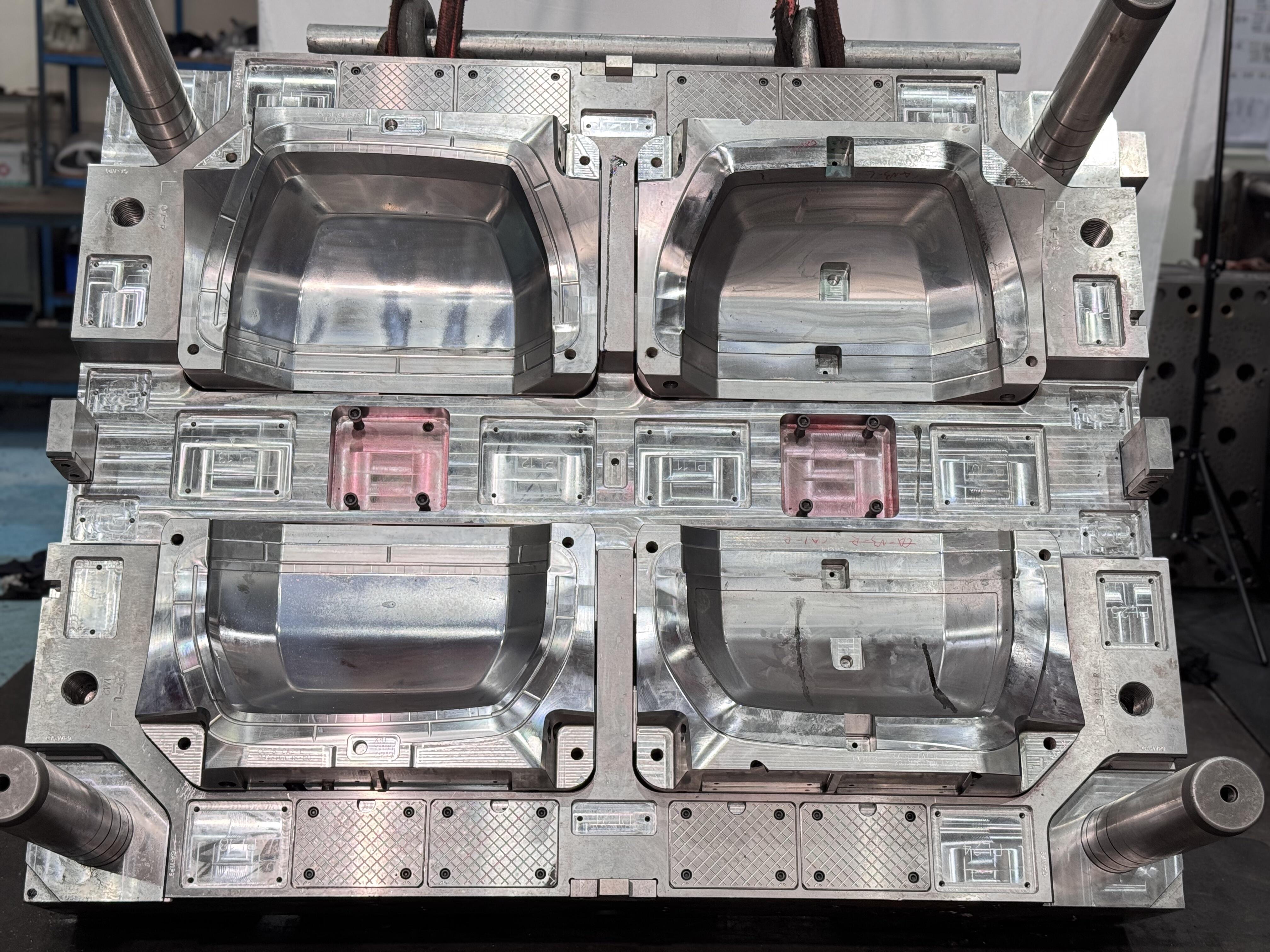
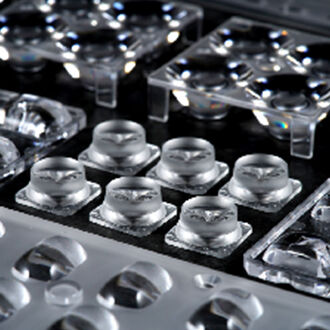
An optical lens injection mold represents a precision-engineered tooling solution designed specifically for manufacturing high-quality optical lenses through the injection molding process. This specialized mold serves as the foundation for producing lenses used in cameras, smartphones, medical devices, automotive systems, and various optical instruments. The optical lens injection mold incorporates advanced cavity designs that replicate exact lens geometries with micron-level accuracy, ensuring consistent optical performance across large production volumes. The primary function of this mold is to shape molten optical-grade polymers into precise lens forms while maintaining critical optical properties such as clarity, refraction indices, and surface smoothness. Technological features of the optical lens injection mold include multi-cavity configurations that enable simultaneous production of multiple lenses, reducing cycle times and increasing manufacturing efficiency. The mold incorporates temperature control systems that regulate thermal distribution throughout the molding process, preventing optical distortions and material stress. Advanced gate designs minimize flow marks and ensure uniform material distribution, critical for maintaining optical clarity. The mold construction typically utilizes hardened tool steel or specialized alloys that resist wear and maintain dimensional stability over millions of cycles. Surface treatments and polishing techniques achieve mirror-like cavity finishes, directly transferring optical-grade surfaces to the molded lenses. Applications of the optical lens injection mold span multiple industries where precision optics are essential. Consumer electronics manufacturers rely on these molds to produce camera lenses for smartphones and digital cameras. The automotive industry uses them for headlight lenses, dashboard displays, and advanced driver assistance systems. Medical device companies employ optical lens injection molds for endoscopes, diagnostic equipment, and surgical instruments. Virtual reality headsets, augmented reality glasses, and wearable technology all depend on lenses manufactured using these specialized molds. The versatility of the optical lens injection mold allows manufacturers to produce various lens types including convex, concave, aspheric, and freeform designs, accommodating diverse optical requirements across different applications and meeting stringent quality standards demanded by modern optical systems.

New Products

The optical lens injection mold delivers significant cost savings for manufacturers by enabling high-volume production with minimal waste. Unlike traditional lens grinding methods that remove material and generate substantial scrap, injection molding uses only the necessary amount of optical polymer, reducing material costs by up to sixty percent. The mold operates continuously with short cycle times, typically producing complete lenses in thirty to ninety seconds depending on size and complexity. This rapid production capability means manufacturers can fulfill large orders quickly, reducing inventory holding costs and responding faster to market demands. The precision built into each optical lens injection mold eliminates the need for secondary finishing operations that traditional methods require. Lenses emerge from the mold with final optical surfaces already formed, saving both time and labor expenses associated with grinding, polishing, and quality inspection steps. Consistency represents another major advantage, as each lens replicated from the optical lens injection mold maintains identical specifications. This uniformity ensures predictable optical performance across entire production batches, reducing quality control failures and customer returns. Manufacturers benefit from lower rejection rates, typically below two percent for well-designed molds, compared to higher defect rates in conventional lens manufacturing. The flexibility of the optical lens injection mold allows designers to incorporate complex geometries that would be difficult or impossible to achieve through grinding. Features like integrated mounting flanges, positioning tabs, and multiple optical surfaces within a single piece reduce assembly requirements and improve final product reliability. This design freedom enables innovation in optical systems while simplifying manufacturing processes. Durability of the optical lens injection mold translates to long-term value, with properly maintained molds producing millions of quality lenses before requiring refurbishment. The initial investment in a precision mold distributes across massive production volumes, making the per-unit cost extremely competitive. Energy efficiency also favors injection molding, as the process consumes less power than traditional optical fabrication methods that require extensive grinding, polishing, and cleaning equipment. The optical lens injection mold supports sustainable manufacturing practices by minimizing material waste, reducing energy consumption, and enabling recycling of optical polymers. Modern mold designs incorporate quick-change features that allow manufacturers to switch between different lens designs rapidly, maximizing production flexibility and equipment utilization. Automation compatibility makes the optical lens injection mold ideal for lights-out manufacturing, where robotic systems handle part removal, inspection, and packaging without human intervention. This automation capability reduces labor costs while maintaining consistent quality around the clock. The compact footprint of injection molding equipment means manufacturers can produce large quantities of lenses in relatively small factory spaces, reducing real estate and facility costs compared to traditional optical workshops requiring extensive grinding and polishing areas.

Tips And Tricks

Why is custom injection molding preferred for complex product designs?

29

Apr

Why is custom injection molding preferred for complex product designs?

Complex product designs present unique challenges that demand manufacturing solutions capable of delivering precision, consistency, and scalability. Engineers and product developers consistently turn to custom injection molding when facing intricate ...
View More
What industries benefit most from professional injection molding companies?

08

May

What industries benefit most from professional injection molding companies?

Manufacturing precision parts at scale requires specialized capabilities that only experienced injection molding companies can deliver. Across global industries, businesses rely on these partnerships to transform raw polymer materials into complex co...
View More
What makes plastic moulding essential for high-volume manufacturing today?

27

May

What makes plastic moulding essential for high-volume manufacturing today?

In the modern industrial landscape, few manufacturing processes have proven as indispensable as plastic moulding. As production demands escalate across industries ranging from automotive to consumer electronics, the ability to manufacture complex, co...
View More
How does plastic injection molding service optimize production timelines?

27

May

How does plastic injection molding service optimize production timelines?

In today's competitive manufacturing landscape, speed and precision are not optional — they are baseline expectations. A well-structured plastic injection molding service plays a central role in helping manufacturers, product developers, and OE...
View More

Get a Free Quote

Our representative will contact you soon.
0/1000
Precision Engineering for Optical Excellence

Precision Engineering for Optical Excellence

The optical lens injection mold represents the pinnacle of precision manufacturing technology, engineered to deliver optical components with tolerances measured in microns. Every aspect of the mold design focuses on achieving the exacting standards required for modern optical applications. The cavity surfaces undergo extensive polishing processes, often reaching mirror finishes with surface roughness values below ten nanometers. This exceptional surface quality directly transfers to the molded lenses, eliminating the need for post-molding polishing and ensuring optimal light transmission characteristics. The dimensional accuracy built into each optical lens injection mold guarantees that critical parameters like focal length, center thickness, and edge profiles remain within tight tolerances across millions of production cycles. Advanced computer-aided design software enables mold engineers to simulate material flow, cooling patterns, and shrinkage behavior before manufacturing begins, optimizing every detail for optical performance. Temperature control systems integrated throughout the optical lens injection mold maintain uniform thermal conditions during the molding cycle, preventing the thermal gradients that cause optical distortions and internal stresses. Sophisticated cooling channel designs ensure balanced heat extraction, allowing molded lenses to solidify uniformly and maintain precise geometric relationships between optical surfaces. The gate system design receives particular attention, as the injection point influences material flow patterns and potential optical defects. Engineers position gates strategically to minimize flow lines, weld lines, and other artifacts that could compromise optical clarity. Multi-point gating strategies distribute material evenly in larger lenses, while hot runner systems eliminate gate vestige entirely for applications requiring unblemished optical surfaces. The structural integrity of the optical lens injection mold ensures long-term dimensional stability, with mold bases constructed from pre-hardened steel that resists deflection under injection pressures exceeding two thousand bar. Precision guide systems maintain perfect alignment between mold halves, preventing parting line offsets that would create optical defects. Wear-resistant coatings protect cavity surfaces from abrasion caused by filled optical polymers, extending mold life while maintaining surface finish quality. Quality assurance measures include regular dimensional verification using coordinate measuring machines and optical profilometers, ensuring the mold continues producing lenses within specification throughout its service life. This commitment to precision engineering makes the optical lens injection mold the preferred manufacturing solution for applications where optical performance cannot be compromised.
Versatility Across Diverse Optical Applications

Versatility Across Diverse Optical Applications

The optical lens injection mold demonstrates remarkable versatility, accommodating an extensive range of lens geometries, materials, and applications across multiple industries. This adaptability makes it an invaluable manufacturing tool for companies serving diverse market segments. From simple spherical lenses to complex aspheric designs with multiple optical surfaces, the optical lens injection mold can replicate virtually any lens configuration that designers envision. This geometric flexibility enables optical engineers to optimize lens performance for specific applications without manufacturing constraints limiting their creativity. Aspheric lenses, which correct optical aberrations more effectively than traditional spherical designs, represent a particular strength of injection molding technology. The optical lens injection mold accurately reproduces the continuously varying curvature of aspheric surfaces, delivering superior image quality in compact lens systems. These advanced geometries would require expensive and time-consuming grinding operations using conventional methods, but injection molding produces them economically at high volumes. Material compatibility expands the versatility of the optical lens injection mold further, as modern molds process various optical-grade polymers including polycarbonate, acrylic, cyclic olefin copolymer, and specialized optical resins. Each material offers distinct properties like impact resistance, thermal stability, chemical resistance, or specific refractive indices, allowing manufacturers to select optimal materials for particular applications. The optical lens injection mold can be configured for different materials by adjusting processing parameters and surface treatments, maximizing equipment utilization across product lines. Size scalability represents another dimension of versatility, with optical lens injection molds producing everything from miniature lenses smaller than five millimeters for smartphone cameras to larger optical components exceeding one hundred millimeters for automotive lighting systems. Multi-cavity mold designs enable simultaneous production of different lens sizes or styles, optimizing manufacturing efficiency for product families. The optical lens injection mold adapts readily to emerging applications as technology evolves. Recent innovations in autonomous vehicles, augmented reality, and medical imaging create new demands for specialized optical components, and injection molding responds quickly to these opportunities. Mold designers can incorporate unique features like integrated mechanical attachments, light-blocking apertures, or combination optical-mechanical elements that simplify assembly and reduce system costs. This integration capability distinguishes the optical lens injection mold from traditional optical manufacturing, where lenses require separate mounting hardware and assembly operations. Product development cycles benefit from the flexibility of the optical lens injection mold, as prototype molds can be produced relatively quickly to validate new designs before committing to full production tooling. This rapid prototyping capability reduces development risks and accelerates time-to-market for innovative optical products.
Economic Efficiency for Competitive Manufacturing

Economic Efficiency for Competitive Manufacturing

The optical lens injection mold delivers exceptional economic efficiency, transforming the cost structure of optical component manufacturing and enabling competitive pricing in global markets. Understanding the financial advantages helps manufacturers make informed decisions about production technology investments. Initial tooling costs for an optical lens injection mold represent a significant investment, but this expenditure distributes across massive production volumes, reducing per-unit costs dramatically. A properly designed and maintained mold produces millions of lenses, with cost-per-piece decreasing substantially as production quantities increase. For medium to high-volume applications, injection molding becomes the most economical manufacturing method available. Cycle time efficiency directly impacts production economics, and the optical lens injection mold excels in this metric. Complete molding cycles typically range from thirty to ninety seconds, meaning a single-cavity mold produces between forty and one hundred twenty lenses per hour. Multi-cavity configurations multiply this output proportionally, with eight or sixteen-cavity molds common for smaller lenses, dramatically increasing production capacity without requiring additional equipment or floor space. This throughput efficiency reduces manufacturing overhead allocated to each lens, improving profit margins and competitive positioning. Labor cost reduction represents a substantial economic advantage of the optical lens injection mold. Automated molding operations require minimal human intervention, with robotic systems handling part removal, inspection, and packaging. One operator can supervise multiple molding machines simultaneously, dramatically reducing labor costs compared to traditional optical fabrication requiring skilled technicians for grinding, polishing, and inspection operations. This labor efficiency proves particularly valuable in regions with high wage rates, helping manufacturers maintain domestic production while remaining cost-competitive. Material utilization efficiency contributes significantly to the economic advantages of the optical lens injection mold. Injection molding uses only the material required for each lens plus minimal runner and gate material, which can often be recycled. Traditional grinding methods remove substantial material as waste, with material utilization rates often below forty percent. The optical lens injection mold achieves material utilization exceeding ninety percent, reducing raw material costs and supporting sustainability objectives. Energy consumption per lens produced is notably lower with injection molding compared to conventional optical manufacturing. The optical lens injection mold consolidates multiple manufacturing steps into a single operation, eliminating the energy required for grinding machines, polishing equipment, washing systems, and drying ovens. Modern injection molding machines incorporate energy-efficient technologies like servo-driven hydraulics and optimized heating systems, further reducing operational costs. Quality consistency achieved by the optical lens injection mold reduces costs associated with defects, rework, and customer returns. Consistent replication of precise optical specifications minimizes quality control inspection time and virtually eliminates the rework operations common in traditional lens manufacturing. Lower defect rates mean higher yields and reduced waste disposal costs. The flexibility to switch between products using the same molding machine maximizes capital equipment utilization, improving return on investment and financial performance for optical component manufacturers.